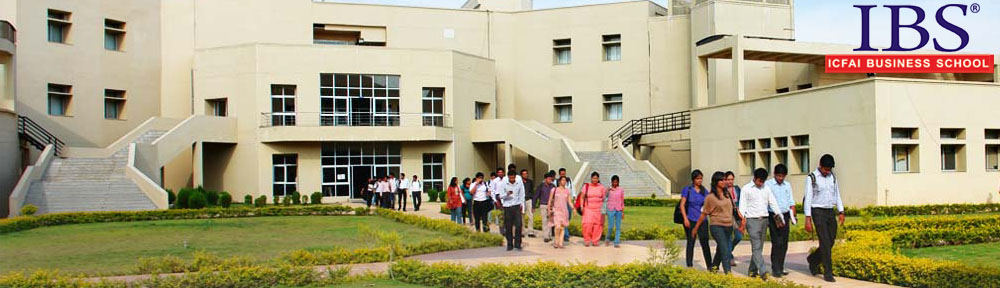
My first year at IBS – The Honeymoon period

Journey of MBAThe past 10 years, I’ve always been noticing how college freshers are so obviously college freshers. They carry college IDs (just as if they were in school), full of excitement and nervousness on their faces (like a bride or groom); spend hours picking out their first day’s outfit, and super-duper excited as if they have achieved something in a big way.

And why not…they actually have.

I find all this a bit amusing but I can also empathise with their feelings as I also remember the excitement, anxiousness and remarkable amount of cluelessness that comes with being an IBS student on the first day.

My first year of IBS @ Ahmedabad campus was certainly like a honeymoon period. I use the word “honeymoon” because that phase was so much fun in real life, when you meet and discover somebody new and fall in love and chase them. The excitement of the pursuit. That climactic final moment of ultimate togetherness. I still remember the day I reached Ahmedabad with my dad who came to drop me off at the hostel full of pride and thrill. I could see a dad that day who was feeling gratified pleasure that his son was being admitted into a prestigious B-school.

That first year at IBS was full of clusters of what I wanted or what I applied for. There were some strange feelings in my mind but happiness mixed with anxiety were the most obvious emotions – happiness at being there and the anxiety associated with starting new things. Exploring the new city, new markets, fun places and lots more! To be part of a group that had the best of talent. Achieve grades with no compromise on fun. That’s just a whole lot of experiences right there. This experience helped me to improve and grow as a person – the man I am today.

According to me, experience is perhaps the best cherished thing to offer in the first year of college. Let me recount some of my more memorable experiences and share them with you.

Don’t be in a hurry to be part of a group; finding the right friends are important:

Yes, I am talking about the groups or the people, whom you meet on the first day of the college; whom you think are just awesome and super cool!!! I would suggest you take a couple of weeks, and then make up your mind as to which group or friends circle you want to belong to. Sometimes, in a hurry to ‘belong’ you may end up doing things that can actually make you feel depressed. Look for friends with similar interests. Imagine, you love cricket they love football or you love dancing, they love trekking or maybe just watching TV!!  Friends are important, but the right ones.

So go slow, understand everyone. Instead of being Best Buddy or Friends Forever with one person you meet, try to mingle around with new people during dining, studies, or festivals.  Remember you still have your school friends to talk to anyway.

Believe in self-motivation, Competition never stops:

You have joined MBA because you want to achieve something. Remember, you could walk a mile and still not be exhausted because you know you want to reach somewhere. You always want to do something different that no one else has done. After IBS, my belief in self-motivation has increased every day. Today, I am achieving what I always wanted to. It’s time to expand your thought, widen your horizons and make self-motivation part of your daily thoughts

Roll…Camera….Action!!!

I am what I am

The first year is a unique time to reflect on your priorities. The first year is also full of ease where you have the right of making choice – of what you want to do. You have time to focus on what sort of person you would like to be. IBS events and the learning model works like a mirror where you can see your future reflection. I remember that the classes were not only challenging but also engaging. Everyone I met was tremendously intellectual and brought a diverse knowledge base that enriched my learning experience. By analysing your performance in various activities, you realise what matters to you.

For example, when I was working on projects related to venture capital and private equity, it was IBS that helped me realize that I like dealing with the operational and strategic aspects rather than the investment side.

b-school

After one month, IBS Ahmedabad campus was like my home. I found I could do all my assignments and enjoy them too. My time management skills were getting better. It just took some time. We all want to run but remember we should know how to walk first.

Yeah, the first year is a honeymoon period but full of struggle – new people, new dimensions, new home, everything is new except you. But, it is worthwhile as I found as it taught me a whole lot about myself.

During the first year, you feel like roaming around and behave like a cool dude….but college is more than that, as you will soon realise. Before you enter college, you feel apprehension and feel that it is all hard work. I used to be confused when people used to say, “I love college”. After a few months, I too felt the same. Your campus is beautiful, it’s your best decision and you’ll constantly refer to your college as the best college EVER. Someday like me, you’ll hate the thought of missing the college and its endless opportunities and freedom in this competitive world.

“College is the best time of your life.”

Lastly, here is my list of what to expect from first year:

  1. 1.Be ready to be inspired.
  2. Be ready to be challenged.
  3. Be ready to make Connections.
  4. Be ready to reinvent yourself.
  5. Be ready to Welcome the new world.

My first year of IBS not only gave me what I wanted, it provided me with enormous experience, that I will cherish throughout my life. It’s an experience that I offer you all to learn from. However, it is your own experience that will be more valuable than my lessons learned. Everyone has a different story to tell and your experiences are the best teacher.

Enjoy your first year!!! Keep sharing your thoughts.

Contributed by Sidhartha Mohanty (Class of 2005, IBS Ahemedabad)

The Entrepreneurial Mind-set

_MG_1747 ddSome months back I was talking to maverick entrepreneur, Kishore Biyani, founder of Future Group and he said, “I’m trying to think like a start-up entrepreneur again. I want to recapture the enthusiasm and drive of those earlier years.”

I thought it seemed like a tall order. The Future Group is a $2.5 billion diversified group, with several entities within its fold. Its core area is retail, but within that, it spans several segments of the industry sector – right from procurement of produce and manufacturing, through logistics to front-end retailing.

But it looks like more people from the corporate world are thinking along the same lines. More recently, Hindustan Unilever top honcho Sanjeev Mehta also said something similar. “We want to have the soul of a small company where speed is the currency, bias for action is the norm, where people are empowered on the frontline and they are not risk-averse. In many ways, it is akin to a startup culture,” Mehta was quoted as saying in the Economic Times.

HUL is a $ 5 billion company with a huge sprawling network that sells everything from soaps and toothbrushes to shampoos, personal care products, ready-to-eat food and so on.

What are these guys thinking and why would they want to think like start-ups? Its like a middle-aged person saying, “I want to be like a teenager.” Well!! Let us see if we can make sense of what they are stating.

The Middle-Aged Syndrome

 You know when you hit the 40s and 50s, you tend to start slowing down. The energy and enthusiasm with which you approached life is lacking, as your body grows stiff and sluggish.

Your joints creak and it is a chore getting out of bed and making your way to office – especially if the weather is too cold, too hot or rainy. Your steps have lost their spring and it is quite possible you will have some ailments. The flesh, so to say, is no longer as willing as you want it to be.

The worst damages are however inflicted on your mind. Your mind is no longer as agile as it was and that’s natural – the years of baggage, all those years of experience and diminishing of your grey cells will have taken a toll. You have been through a lot and some amount of disillusionment has set in. You tend to be cynical about things; the gloss on your idealism has faded. There is a lot of ‘don’ts’ and ‘nots’ and can’ts in the way you think and speak.

The middle-aged rot has set in and if you allow it to progress, the decline can be sharp.

Just like us living creatures, a company too suffers from middle age. I can think of a very good example. During 2003-2004, analysts tracking software leader Microsoft remarked that the company had hit middle age and was showing typical symptoms. It had become bureaucratic – too many rules and regulations. It had a bloated workforce. Its operational structure had become so complicated that nobody knew who was reporting to whom. One person would find that she had several functional heads. Decision-making had become tortuous. Innovation and creativity was being suffocated as the company became larger and it diversified into more areas in technology.

The company, fortunately, did a reality-check (after a couple of dismal quarters) and took some measures to right itself. There were large-scale lay-offs and the company changed its way of functioning altogether by splitting its businesses into verticals.

startup

The Start-up Syndrome

 Think of how you are feeling now – those of you who are just stepping into adulthood. Don’t you feel that the whole world is just waiting for you to conquer them?

You are probably full of ideas and ideals, brimming with youthful energy, not caring about the competition and ready to take on rivals. You are willing to work around the clock, intent only on achieving your ambitions and fulfil your dreams and passions. Hurdles and obstacles are not roadblocks, but things over which you just need to jump higher.

A start-up venture is similar. It has a vigour and vitality that is a reflection of its founders and employees. Since it is new, there are no restricting rules, the structure is almost flat and everyone is accessible to all. Intimidating and aloof cabins have yet to be built and there is a general camaraderie. The leader takes decisions on the spot and everyone participates in it. Information flows freely and horizontally. Meetings are open and everyone knows what is being discussed. Due to the transparency, there is trust.

This phase lasts for a few years until the organisation starts to grow; more functions are added and there are several layers in the structure. Hierarchies develop; decision-making becomes opaque; the top boss is virtually inaccessible and bureaucratic procedures start to take the place of informal interactions and instructions.

What it means to have a Start-up Mentality

Future Group is just about getting on into middle age while HUL is long past it and is well into old age. For its chiefs to say that they want to think like start-ups, means that they want to bring back the agility, flexibility, speed in its operations and freshness in its way of thinking – that they used to have when the companies were young.

It is not really possible for older, well-established companies to simplify their structure and operations beyond a point. The sheer scale of their operations precludes that. However they can (and should) bring back the originality and newness in how they think and in the way they execute their decisions.

To a certain extent, large corporations can also reduce the number of decision-making layers and the channels of information flow. The head of a manufacturing unit should be able to speak directly to the shop floor supervisor, without having to go to through several intermediaries. Chains of command sometimes lengthen usually for no reason other than ego and to give importance to certain positions.

You have to remember that corporations exist – not for the benefit of a few people who are managing it – but to bring products and services to the market, for the people and for the economy. That is the ultimate bottom line; corporations and their promoters should not lose sight of that fact.

When you get absorbed into the corporate culture, you have to remember this and act accordingly.

Contributed by Janaki Krishnan, an entrepreneur in the education and skills sector. Prior to this she was a business journalist. Writing continues to be her abiding passion

How to Improve Your Score In IBSAT

Reading booksThough writing on this subject matter is a difficult exercise, as to predict anything about IBSAT pattern is a difficult one. However there are certain parameters on which if you work upon you can certainly improve your score. Though no hard and fast rule but on a general principles if you follow the guidance note mentioned below in this article you can use the best of your abilities and can come up with flying colors.

1. Work on Basics –  Go back to basics and strengthen your base so that you are conceptually clear in the subject. According to experts, the trend of IBSAT questions demands conceptual clarity.  This is the time when you should recognize your strengths and weaknesses. Try to take a trial mock test. You may not score very high in this nascent stage of preparation, but you will know your strengths and weaknesses and strategize accordingly by focusing more on your weak areas and practice the strong areas adequately so that you don’t lose your touch . Once you are through with the basics then comes the stage of practice.

2. Maximum no of questions need to be attempted – The first cardinal rule is try to cover the maximum no of question, it does not mean that you should do the maximum no of attempts but you should not miss the easy questions, so scan the entire paper and try to hit all the easy balls. At times it happen people get struck in a question and the precious time get wasted and a person not able to cover the entire paper.

3. Accuracy –  Along with attempting the maximum no of questions try to be accurate, otherwise negative marking will curb your score.  Attempt only those in which at least you are 75% sure, rather than making wild guess. Even attempting mock test try to focus a lot on accuracy.

4. Time Management – Allocate Time for each section, so that at least you should not be out of the race because of minimum cut off barrier.

5. Focus on your core strength area –  While attempting IBSAT try to focus a bit on your strong foothold area and it is personally recommended to start with your strong area as it will help you to built your confidence and will place you in comfortable area. Personally I being strong in my data interpretation section and it had given me an edge as DI has bunch of question interlinked to one para reading so it will help you to give answers in bunch of 4 or 5

6. Practice a lot on quant and DIYou can improve your score on quant and DI by practicing a lot , you can attend mock test online and offline and it will help in increasing your accuracy and your speed. You need to fix a clock and try hard on speed. The mantra is first increase accuracy then speed.

7. Tips for verbal ability – Improvise on your vocabulary and reading speed. Read good news paper like Hindu , economic times and others and try to jot down words whose meaning you don’t know and write their meanings this will help you to make your personalized dictainory
For increasing reading speed try to read by removing the comma . You should try to get the crux of the subject matter rather than going in great detail. For improving your vocabulary you can go through the book “Word power made easy”.Advantages Of A Full-Time MBA Program

8. Use logic at times rather than solving the entire questionYou at times need to judge the correct answer by Looking at the options and negating one by one on logic .identify which options not applicable rather than finding out which one is applicable.

9. Develop instincts to identify which question is difficult and need to be left out. You have to bit selective while answering the questions as you have to see you should not fall in love with any question and waste your time. You should be attentive to see that you should not leave the easy question.

10. Develop habit of calculating in mind –  You should try to use your mind for calculating things rather than pen or pencil, this habit need to be developed though it takes times but help in curtailing time and improving your score.

11. Take light food on the day of IBSAT – Try to eat healthy food like lot of salad, fresh fruits, green tree, you can start this habit at least one month before, so you can remain fresh and not fell sick at any point of time. Do not take oily food or rice on the day of test as it creates drowsiness and decreases your alertness.

12. Take a good 8 hr sleep in the previous night to test day – It helps to keep your mind in perfect fit to create a good score.

13. No panic at last moment – Take care of arranging the pencil box, your admit card and try to start early for the examination center and reach well before time, so that you can avoid the risk of congestion on road or any unusual incidents. If your center is in a different city then try to reach at least 1 day in advance, so you can settle down and acclimatize yourself.

14. Time of test taking is importance – When you receive the admit card check the timing and suppose the time of test is 10 am, then place yourself everyday at 10 am to take mock test so you develop the habit of taking test at this time. Your mind will then work at maximum alertness at this time, because you have train your mind for test for this slot.

15. Not get disheartened with mock test score which you have appeared just before IBSAT – Every exam is different, so not lose your confidence or become sad with the mock test score, which you have appeared at the eleventh hour of examination.

Contributed by Maneesh Srivastava ( Class of 2008, IBS Gurgaon )

Email Etiquette –Recollecting Office Experiences

email attiquetteThere are a lot of hilarious instances, which comes to my mind when the topic of email etiquette surfaces. I recollect reading an email (which went viral in our office), addressed to a ‘Jacket’. Here’s what the mail had to say-

“Hi Jacket – Please look into the priority ofthe issue, which the development has sent us. Need to get back to them by threw.

Rids,

Siva

The actual content of the email was-

“Hi Jasmeet – Please look into the priority of the issue which the development has sent us. Need to get back to them by tmrw.

Rgds,

Siva”

 Lesson learnt- using the autocorrectfunctionalityin emails without proof reading it can cause massive damage to your linguistic reputation. Also, we should be careful while drafting the emails. Do not try to save Nano seconds by using abbreviations, text messaging or shortcuts in the official emails. In the above email shortcuts to two simple words (‘tomorrow’ and ‘Regards’) invoked the autocorrect functionality to disastrous results. So avoid shortcuts to avoid embarrassment.

There was another incidence when I was leading a project and one of my team members emailed me requestingforleave during a time when the project deadline was approaching.

It read, “ I will be unavailable tomorrow due to some personal emergency. I need to get my cooking gas cylinder replaced. I need to stand in the queue for hours as the supply is short”.

The CC was marked to my boss, my boss’s boss and the director of our product group.

Though I appreciated the guy’s honesty, I had to take a moment’s pause trying to understand his ‘personal emergency’. Precisely, at that time my boss came out of his chamber and called me in to understand why he, his boss and the director are being marked in the email. I was speechless.

The moral of this email- keep your personal stories out of your official emails (though it is okay to share the details with your boss verbally, if required). Also, do not mark people in CC when they are not required in the loop. Such emails will be directed to the junk folders of the non-stakeholders. Keep matters simple.

I recollect another situation when I had totally forgotten about a task, as it had seemed unimportant at the time it came to me. I was working on a global technology-consultingproject, where the stakeholders were from different countries. A majority of our project work was with US and Europe. A small part of the work was being done for Japan. At the beginning of the requirement analysis phase, an extract of the email from the Japanese client read –

Please look into the requirements which are listed in the attached MS excel file. We will need most of them towards the second phase of the project and not now. In the first phase of the project (currently underway) we mostly have ‘good to have’ requirements and need not be treated as ‘must have’. Kindly arrange for a meeting to discuss it”.

 At first, I was delighted to read to email. I did open the content of the excel file and checked that there are no ‘must have’ requirements in the current phase of the project. Then I replied that I would arrange for a meeting soon and I forgot about it. There was no reply from my Japanese counterpart for the next six months – almost till the end of the first phase. One Friday morning, when I was in the best of my Friday mood I opened my inbox, and there I could see an email marked with the ‘Important’ flag. I opened the reply after six months. An extract of the email was as below(the first line was in red font color and in bold)

Why has a meeting been not arranged with us till now? This project is coming to a closure and we have been completely left out from the discussions in first phase of this project. We want this to be matter to be escalated.”

email-etiquette-mistakes

I underestimated my Japanese friends. With my Friday mood being replaced by embarrassment, I briskly walked to my boss’s cabin knowing fully well that he was the only firefighter who could save me. After a couple of conference calls with the Japanese client, the matter was finally put to rest and there was respite for me. Thankfully, my boss was supportive and he knew how to handle the escalation.

That incident taught me few important lessons regarding email etiquettes, which I would like to share in this post.

  • Always close email loops even if they seem unimportant. In the above case, had I closed the loop six months back; I could have saved myself the embarrassment of an escalation.
  • Never make an open-ended reply in an email. In the above case I replied the initial email from the client saying that I will arrange for a meeting ‘soon’. Rather, I should have mentioned a date and a time for the meeting in the email.
  • Never reply an email in haste. If Ihad replied the escalation in a hurry I could have done more damage. I did the right thing by discussing it with my boss. The calls (in place of emails), which we made to the client, seemed to pacify them. The email was replied only after that.
  • The next time a mail written in bold and red font is received; understand that the person is literally shouting at you at the top of his voice. However, it is not the best way to vent your anger and is not advisable to draft an email in that manner.

There are times when we get upset by reading an email- especially by the choice of words being used in the content. One such incident happened when I read the below email from one of my clients with whom I shared a wonderful rapport.


“Why is the issue not resolved till now? Please send the resolution by today afternoon.”

The background to this email is very simple. There was a minor error committed by one of the team members in the weekly update report. I had to rectify and resend it. I already spoke about it to the client about an hour back in a teleconference.

At first, when I got the email, I got upset because-I found the email to be in reprimanding tone and I felt I was singled out for no mistake of mine. However, my better sense prevailed and I chose to call the client. He spoke to me in a very amicable manner and he told me that he was waiting on me as his boss is expecting the report post lunch.

I understood, that there was nothing personal in the email. Sometimes, people are so worked up that they do not pay much attention to minute details while drafting an email. The matter ended there. In your work life, if you get any emails, which offend you, make sure you think twice before replying it in a befitting manner.

Those were some of the incidents, which I wanted to share regarding email etiquettes. Mostly, I have mentioned about the common mistakes, which we make in our day-to-day lives. Hope this proves to be helpful to all the readers of this post.

Contributed by Sanjit Das ( Class of 2005, IBS HYDERABAD )


Women in Board of Directors,Why Companies are Shying Away?

unnamedEarlier in February 2014 SEBI( Securities and Exchange Board of India) issued the guideline seeking compliance before 1st of October 2014 for all to all the listed companies to appoint at least one woman director on their board, later on the deadline was extended by six month.In March 2015 again warning was re-issued, failing to which companies were about to face regulatory action.Even after various notifications and threats of regulating actions various companies failed to meet the deadlines while others simply went with the appointment only on the last date of the deadline.

The notification was in response to SEBI’s finding regarding absence of women from board of directors in nearly 1/3rd of top 500 listen companies in the India.

In an era when Indian ladies like ChandaKochar, IndraNooyi,KiranMajumdarShaw and many of their likes have proved their acumen worldwide why was there so much reluctance in appointing women at senior position that too when the minimum criteria was to appoint only one woman?

If we analyze the situation globally according to Grant Thornton International Business Report , in2015 only 22% of senior leadership roles are held by women worldwide which is mere 3% rise as compared to 19% in 2004.This research was carried out in 35 countries of North America, Latin America, European Union as well as Emerging and developed Asia Pacific Countries. India ranked 3rd from the bottom just above Germany (14%) and Japan (8%) ,with merely 15% of women in senior leadership role which was way below the global average. Worth mentioning Germany and Japan are victim of aging population unlike India which comprises of 487 million labour work forces according to 2013 estimate.

Among BRICS nations only Brazil has same percentage of woman like in India at senior roles, rest all not only have better representation of women they rank well beyond the global average of 22% too. In China 25% of senior roles are held by woman which is a decrease from their previous best of 32% in 2007, while Russia is number one worldwide with 40% women in senior roles followed by South Africa (27%).

If we compare India with other Asia Pacific Countries, both Australia and Singapore sit level with the global average. While Indonesia has 20% of female in senior leadership roles, Japan is at the bottom of the list with merely 8% women at senior leadership roles. Epso Facto even Nigeria has 21% female at senior leadership roles which is 6% more than India.

shariquepic1


Source: Grant Thornton International Business Report-2015

Another major finding according to the research shows that globally women are more preferred at senior leadership roles in sectors like Education and Social Service (41%), Health Care (41%) Hospitality (33%).While at the same time their representation at senior level positions is very low in sectors like Manufacturing, Technology and Transport at minimal 19%. Mining and Querying industry has least percentage of women at top positions with global average of 12%.

Worth introspection is the reason of under representation of women in India at senior leadership positions in corporate world. What is causing that bottle neck, do they not get equal opportunity, do they intentionally not pursue bigger ambitions, is it because of the social barrier or is it because they do not perform better at senior positions?

shariquepic2

Source: Grant Thornton International Business Report-2015

According to the research report parenthood, family pressure, gender bias, insufficient support structure for women, lack of female at senior positions to encourage the subordinate female employees, lack of role model as well as legal conditions are few of the major reasons globally leading towards under representation of women at senior position and that applies to India as well.

Today when Indian economy is flexing its muscles to compete with global giants like China and USA, we are simply ignoring half of our best talented work pool. Truth be told any economy can’t achieve its threshold potential by simply using half of its most talented people while ignoring the other half. It is proven fact that a more diversified group leads towards better and simpler solutions to problem as compared to homogeneous group. Saying so gender might not be the sole parameter for diversification it is fundamentally step to towards the right direction.

Looking at the existing scenario one realizes that attempt by SEBI , making it mandatory for all the listen companies to have at least one woman in board of director is a commendable step. If it is implemented seriously it will bolster the Indian economy as well as give shot in the arm to the dreams of millions of young ladies who want to make it big in the corporate world.

But it would be worth watching that this norm is not fulfilled only for namesake. There will be situations where business houses will simply promote the daughters, wives or other female family members of their promoters or top executives just to abide by the obligations. Honestly speaking it will not serve the purpose rather would be a rhetoric case similar to the one we have been observing in elections. It has been usually observed that on seats reserved for female quota in elections most of the time a female candidate is the daughter or wife of the male member of the family who use to contest elections earlier, thus leading towards a mere representational female head while all the decisions are still taken by the male.

Still one should not forget that it is just the beginning and looking at the excellent track record of SEBI in enforcing the regulations, they will surely take care of this fact too and make sure this opportunity is extended to every working women who aims and deserve to be at key positions in the organizations where she is working.

Contributed by Sharique Hassan Manazir (Class of 2011-13, IBS HYDERABAD )

Before, then and beyond… The IBS Sojourn…. Part 2

This blog post is 2nd in a 3-part series titled “Before, then and beyond… The IBS Sojourn” written by IBS Hyderabad Alumnus Rohit Mathew (Class of 2000). It is written from a third person perspective. This 2nd part (then) shares about his life at IBS.
If you have not read the first part yet. Find the link here.
MBA GraduatesHe conveyed his decision to the organization, and they gracefully understood the circumstances under which it was taken. Now that one tough decision had been done with, he had to think about how to tackle the next problem at hand. One week was barely enough to get everything ready and be present in Hyderabad for the final rounds of selection.

Since the interviewing organization had booked his tickets, he still, had time to go back home. After all, one does not miss too many chances of visiting a state as beautiful as Kerala. He had asked his father to courier the documents to him in Kerala.   Meanwhile, he wrote to the Institute, requesting a change in the dates of his interview. The institute obliged, and he had managed to buy himself some much-needed time.

On the appointed day, he was there at the IDPL complex in Hyderabad, where the final two-day selection session was to be conducted. The experience of going through a real life group discussion during his recent job interview kept him in good stead through the GD at IBS. Unknown to him, a surprising incident was to occur in the future concerning this very GD. The rest of the proceedings also went off well and by the end of the second day, he saw his name on the list of aspirants who had secured an opportunity to study at IBS, Hyderabad.

A fish out of water is what the first day at IBS felt. The small town lad was still to find his bearings in cosmopolitan, Hyderabad. With a formal education in the science’s, he had no clue of either commerce or economics. Subjects,which were completely alien to him. But then, if his grandmother could do it, why couldn’t he?

The two-years, he spent at IBS, would turn out to be one of the best. The rigor of the program, the exposure to a group of batch mates so varied in experience, cultures and educational qualifications, to face the realities of the world, gave the lad from Meerut a completely different view of the world than what he had grown up with.From the safe confines of his home and family, where he had spent the past two decades of his life, the two years at IBS taught him more on how to face life’s challenges than his sheltered life ever had.

At IBS most importantly, he learnt the importance of taking risks. He understood the significance of smart work, the value in building lasting relationships and adjusting and thriving in a diverse environment. An environment where he a rank newcomer had to compete with friends who had close to a decade of work experience. He realized that in order to improve and mature, he had to be surrounded by people who were more experienced and knowledgeable than him. That was what the two years at IBS had given him.

He could now appreciate the soundness of the decision that he had taken, when he chose to pursue his education instead of accepting that first job offer.

What the IBS sojourn had given him was unfathomable. IBS had made him a confident man.


“RESILIENCE”- A MUST LEARN FOR MBA ASPIRANTS

res-org-diagramAre you ready to face failure? Frankly, most students who join an MBA class aren’t ready to deal with failure. If you know about the Duck Syndrome you will understand the line below:

An MBA students has to be like a duck in water. On the surface a duck appears calm, moving smoothly and effortlessly while the water surface is undisturbed….but below the surface, only the duck knows how hard ithas to paddle to stay afloat.

The desire to look effortless can be a problem for many people. I’ve met people who deal with depression, are not able to handle stress and pressure, view failure as obstacles, have negative thoughts, are deterred by challenges thrown by life, give up on difficult situations and so on. Many react to such situations with strong emotions and a sense of uncertainty. You people can also face your life challenging situations to.

Are you thinking how?

With the “POWER OF RESILIENCE”

This blogaims to guide MBA Aspirantsor anyone taking their own road to resilience. Topics covered describe resilience and elements that distress people and how they can deal with adversity. However, the major focus is on developing and using a personal strategy for enhancing resilience.

WHAT IS RESILIENCE?

The process of adjusting ourselves in the face of adversity, trauma, tragedy, threats or substantial stress. —in simple terms “bouncing back” from challenging experiences.

Resilience is absolutely normal – nothing extraordinary. In our daily lives people demonstrate resilience on a regular basis. One of the recent examples is the response of Indians staying in Nepal after the earthquake in April 25, 2015 and their efforts to re-establish their lives.

Resilience means facing difficulties with audacity and persistence – denying giving up. It is the kind of personality that allows a person to recover from misfortunes, adversities, disturbances and so on.

Being resilient does not mean that a person doesn’t experience difficulty or distress. Emotional pain and sadness are common in. In fact, the road to resilience is likely to involve considerable emotional distress. People with the ability to be resilientoften discoverunexpected reserves of strengths in difficult times and improve confidence by overcoming hardship. Resilience can lead to an intensely satisfying life.

Resilience involves behaviors, feelings and movements that can be developed by any individual.

 ASPECTS of RESILIENCE

Many factors come together to contribute to resilience. It is usually seen that a supportive relationship plays an important role in bolstering resilience as it offers encouragement and reassurance.

Otheraspectsthat are associated with resilience:

  • Ability to devisea realistic plan and execute it
  • Optimistic view about oneself
  • Self-reliance in one’sstrengths and capabilities
  • Good communication and problem solving skills
  • Able to manage strong approaches and desires.

All of these are some of the aspects that you can develop.

TACTICSFOR DEVELOPING RESILIENCE WITHING YOURSELF

Developing resilience is a personalexpedition. We don’t have the same reactions to different stressful life events. Tactics for developing resilience that work for one individualmay or may not work for another.

With rising cultural diversity, individuals havesuperior access to a number of different tactics to develop resilience.

10 WAYS TO DEVELOP RESILIENCE

As a part of your own personal strategy, you have to identify ways that are likely to work well for you for fostering resilience. Here are 10 ways to develop your resilience:

  • Realize that change is the only constant thing in life
  • Create and maintainnetworks
  • Focus on your goals
  • Foster an optimistic view of yourself
  • Keep things in perspective
  • Maintain an expectant outlook
  • Opportunities for self-discovery is important
  • Stop seeing crises as irresistible problems
  • Take decisive actions
  • Learn from your past
  • Follow any hobby that can distress you like reading, meditation, spiritual practices and so on

FLEXIBILITY IS IMPORTANT

As you deal with stressful situation and events, it is important that resilience comprises sustaining flexibility and balance in your life. This happens in several ways, including:

  • Allowing yourself to understand and cope with strong emotions
  • Able to handle the emotions at times in order to continue working
  • Take a front seat and deal with your problems
  • Look forward to the daily living demands
  • Step backward to relax and reboot yourself.
  • Spending time with friends and family
  • Encouraging yourself
  • Having faith in you and others

SOME QUESTIONS TO ASK

There are some questions that you can ask yourself about you and your reactions to stressful life events, which can help you discover your response to difficult situations in your life. Learning from the past events and focusing on your strengths can help you learn and discover resilience that might work for you.

  • What events stress me the most?
  • How have events affected me?
  • Do I have important people in my life who are there when I am distressed?
  • Do I have any support?
  • During difficult times, what have I learned about me and my interactions?
  • If someone has similar stressful events, can I assist them?
  • Was I able to overcome obstacles, and if yes, how?
  • Reason I am more hopeful about the future?

COMMON MISCONCEPTIONS

  • Resilience is a trait: Answer is NO. Resilience is not a trait. It is a capability that can be learned by and developed in anyone.
  • Healthy families don’t have problems: Remember every family has problems. Handling the problems is different for different people. Some have financial while some have emotional problems.
  • Resilient people are independent, tough, and self-reliant; they don’t need much from other people: Not true really – Individuals with resilient quality are practical, have strong social networks, discuss their troubles withtheir close ones,and ask for help when they need it and so on.
  • Resilient people are immune to stress and negative emotions: Somewhat Yes – Only difference is they have more positive emotions like gratitude, joy, kindness, love, andare able to find meaning and purpose for their lives.
  • Adversity makes people stronger: Answer is NO – It is the process of struggling, learning, and persevering that makes an individual strong and not the adversity.


To help summarize below are few beautiful lines by Mike Norton:

“Never say that you can’t do something, or that something seems impossible, or that something can’t be done, no matter how discouraging or harrowing it may be; human beings are limited only by what we allow ourselves to be limited by: our own minds. We are each the masters of our own reality; when we become self-aware to this: absolutely anything in the world is possible.

Master yourself, and become king of the world around you. Let no odds, chastisement, exile, doubt, fear, or ANY mental virii (virus) prevent you from accomplishing your dreams. Never be a victim of life; be its conqueror.”

The only thing in life that we need to learn is to offer gratitude, happiness, positive attitude towards others. Resilience comes along with lots of other life changing components. It is a practice. Do you think that you have got few qualities mentioned in this article? If yes, then you are on the right track, If no change yourself and get going.

Contributed by Sidhartha Mohanty (Class of 2005, IBS Ahemedabad)

Grow by Small Talk

11-3

Small talk is an informal type of conversation in a social or a formal situation.Casual conversations provide opportunities to strengthen relationships and build good rapport between people. Such conversations come naturally and easily to some of us while it’s a dreadful experience for others.

People belonging to the latter group may be feeling, “ Why is small talk so important? Isn’t it enough to make great presentations and to the point conversations? The fact is that small talk is a valuable link that connects people personally and professionally. To reap huge benefits out of your killer presentations and to the point conversations you must master the skills of small talk.

What are the benefits of mastering small talk?

When you confidently walk into a room full of people dawning a smile, knowing exactly whom to approach, what to say and how to engage people, it gives your image a big boost. After all impressions go a long way in ones career and life!

You become more effective as a manager when you know how to set the tone for a difficult conversation by using casual talks in the beginning and towards the end of a difficult dialogue. This forges the relationship and at the same time makes the desired conversation more meaningful.

You become great at putting people at ease and thereby gaining their confidence. People are usually very insecure and fear rejection from others. Once you have won their confidence winning a business deal becomes much easier for you.

You get a lot of important information through small talk, which helps you to gauge the situation and act accordingly.

People like to do business with the people they like. A good conversationalist often brings out a positive feeling that people love to have. And if you know how to create that positive vibe, people will love to be in business with you.

Improving your conversation skills can reduce your anxiety in any social events; it can lead you towards opportunities of growth and success.

Chatting up with new people can inspire new thoughts and ideas as you tend to think in a new way when you are talking to someone you are less comfortable with!!

How to go about it?

Expert conversationalist Debra Fine wonderfully explains that we become better conversationalists when we employ two primary objectives. One- Take the risk of starting a conversation and Two- It is upto us to assume the burden of conversation.’

We should not expect people to approach us and make us feel at ease. Whenever an opportunity arises grab it and make the first move to get to connect to people. You may feel uncomfortable initially but remind yourself that you are not going to lose anything. So why not try?

Secondly, it is upto us to kill the awkward silences that surface during conversations. It’s our responsibility to be prepared, to bring up topics for conversation, to remember names and to introduce people to others. If others feel comfortable with us, they will feel great about doing business with us.

Below are some important tips to get you started:

1. Be a good listener- listen carefully and make the person you are speaking to feel like the only person around. Stay genuinely interested.

2. Break the ice- learn conversation icebreakers that suit your style. Once you learn them, use them at every given opportunity.

3. Make good eye contact and smile- good eye contact and genuine smiles adds a personal touch in conversations.

4. Remember names-make it a point to remember the names of people and to use it during conversations. In case you forgot a person’s name, rather than avoiding the person be honest and ask the name again.

5. Do not wait to get introduced-grab every opportunity to introduce yourself.

Build-International-Network

6. Find common ground- the knowledge that we share something in common with others automatically connects us with them. We are humans and we do have things in common. The trick lies in identifying the common ground.

7. Reciprocate-When your communication partner responds, reciprocate.It’s important to keep building the on going conversation.

8. Be well read – in order to have common conversation topics and to keep building the conversation be up to date on the general news.

9. Contact Information- if you had a good conversation with a person professionally; open the opportunity for the next connection by exchanging contact information. Remember to follow up using an email or a phone call.

10. Avoid getting too personal- in casual conversations be careful about not intruding into other people’s personal space.

11. Discuss the surrounding- when you are totally confused about what to say you can always discuss about the arrangement of the place or the music that is being played. That is something you share at the moment with the person you are talking to.

12. Avoid using controversial topics-remember that we are not entering a debate rather we are trying to make a connection. It is best when you stick with topics that are generally acceptable.

There are people who try to be too interrogative and can devastate a good conversation. There are certain others who will keep talking about themselves. They try to dominate always without listening to others. Then there are people who are ready with advices for all situations in life. In such cases try to bring back the conversation to a common ground and if that doesn’t work gracefully exit the conversation and move away.

It may seem too difficult in the beginning but with time and practice this skill can be mastered with great ease and style.Using seemingly futilechitchat, we can test the waters, network with people, make new relationships, generate new ideas, and problem-solve.

In this age where we are constantly stuck with our smartphones, small talking for a change forces us to unplug and listen to and speak with a real person. It may seem complex in the beginning—but by following a few simple steps, you’ll soon be finding yourself gaining huge benefits in your life!

Contributed by Sanjit Das ( Class of 2005, IBS HYDERABAD )

The Common-Sense Way Of Management

MBA aspirants

If you stick your hands into fire, you will be burnt. If you stand in the morning sun, your shadow will lie towards the west. If you frown at someone, that person will likely frown back at you. These things are what our common sense tells us, based on facts, experiences and observations.

Common sense is about being practical, about knowing the way that things or people will act or react when a particular action is performed on them. If you cut your finger, it will bleed.

Most of our actions are governed by this common sense but sometimes this common sense deserts us. Or, we refuse to listen to what our common sense tells us. Often, our emotions override our common sense and our awareness of what is right and wrong.

For example, all of us know that if we start saving money right from our first salary cheque, we will accumulate a good corpus by the time we are ready to retire. But, how many of us actually put it into practise? We’d rather enjoy ourselves and spend the money now than listen to that hard-headed voice inside us that tells us to save and invest.

That common sense also deserts us in our relationships; lack of communication, bad behaviour, doing things that hurt others – our common sense tells us that these things are not right but still we go ahead and do them anyway. Indeed, as someone has rightly pointed out, common sense is not so common.

If you ask ‘would a common sense method of management really work and would it really solve most of our management problems?’ I would reply, ‘why not? Being level-headed, practical and realistic should not harm us in any way at the least.’ Let us try to apply common sense principle to various facets of management in an organisational setting.

Managing People:Organisations are all about people. People mean emotions, ambitions, desires, and happiness. People seek to find satisfaction and contentment in what they do. Applying the principle of common sense management here means that employees in an organisation should be kept happy and satisfied if they have to be productive. There are two ways this can be done – by giving them good wages and creating a satisfactory work environment.

10628022_857398074271303_6231926068358973854_n

‘Good wages’ is very subjective but if you pay them enough to live on comfortably they would not complain (well, not too much because human nature being what it is, nobody is ever satisfied with what they earn). An organisation is however constrained by the money it makes. If it cannot pay them satisfactory wages, it can at least make up for it by fostering a congenial working atmosphere. Reasonable working hours, empathetic bosses, praise for their work, concern for their welfare, good promotion channels, scope for showing their talents, flexibility with regard to roles and functions, outlets for their creativity and so on are some of the more practical methods of keeping them happy. These are all non-monetary elements and can be easily implemented with a little bit of planning.

Finances and Funding: Money and its management is an essential component of any organisation. So many entities have been ruined and bankrupted due to faulty money management techniques. What does common sense say here? Equity is a cheap source of funds. Equity funds also mean that you are spreading out your risk (in terms of concentration your funding sources) over a wider base. It is better to have a larger number of people sharing in the liability than putting it all in the hands of a few investors. Again, debt is easier to raise but it has to be serviced by periodic payments. You cannot afford to default. It is also common sense that you have to get the cheapest debt available.

In any management scenario, common sense dictates that funds should be raised when the conditions are right and when they are available. Funding plans should coincide with those times when there is ample liquidity in the system and money is cheap. Let us try to explain this with a home grown analogy – would you buy a house or take a home loan when real estate prices have risen sharply and interest rates are on their way up? Your common sense should supply you with the answer.

Marketing and Sales: Searching out the right markets for your products and services and then selling them to customers there, are important activities for an organisation. What are markets but people and who are customers, but people. Once you realise this fundamental fact, then it becomes easier to prospect and apply your common sense principles. All marketing activities have to start with research, which means knowledge of the people, their commercial activities, the consumers and their demands. The two common sense questions you have to ask at the outset are – what do they need and what do you have? If the two match then you have to go a bit deeper and ask: are your products and services the right ones for them? If they are then you ask further: can I provide it at the price they want and does it meet their quality standards. If you actually analyse every situation in this way, you will find that it requires a few common sense questions that will point you in the right direction.

The reason why so many marketing and sales strategies do not succeed is that we fail to apply our common sense and start to assume things. A very good example of this was Tata Motors and the Nano car. The company assumed that two-wheeler owners would be only too glad to upgrade to a car and it would not really matter what kind of a car it was so long as it had four wheels and was cheap. They failed to factor in the fact that two-wheeler owners also have aspirations and would look for quality, performance and value for money.

Would common sense work in every situation and would it be all that is required to be a successful manager? Probably not; sometimes you may have to suspend common sense and put some of your uncommon senses to use. That is often called a ‘leap of faith’ where you go contrary to common sense and you succeed because progress and evolution all call for something out of the ordinary. Innovation has to take place and this requires you to defy common sense and take a different path altogether.

I would say that about 70 percent of our problems can be solved by common sense solutions.

Contributed by Disha Parekh Mohanty

Unorthodox Job Search Techniques

How to Sell Yourself

You send out perfectly polished resumes and cover letters. Your LinkedIn profile is optimized. You’re networking, volunteering, blogging, tweeting and doing everything possible over social networking sites… and still, no success. If you’ve been at it for a few months and aren’t getting the results you want, it may be time to rethink your approach. It may be time to get a little weird and wild.

These unorthodox job search techniques are not going to work in all situations, and they are not for the faint hearted. But really, as long as you’re not going to be behind bars, what do you have to lose? You already don’t have that job. If you try a strategy below and it doesn’t work, your worst-case scenario is that you will continue to not have the job. You might be Internet famous for a few days if you manage to really embarrass yourself, but you can always incorporate that viral video into your marketing campaign.Haha! That’s fun… right?


Here are a five unorthodox job search techniques you should consider trying:


  1. Digitalize your advertising stunts

If you have the technical know-how, kick it up a level and do your advertising online. Use Google, Facebook, Bing, and other platforms to deliver targeted search and display ads to your ideal employers’ desktops and mobile devices. You can do this on a pretty low budget and if it catches the attention of the right people, you’ll have done an amazing job of differentiating yourself from your competition. You can start with searching the internet for companies like ‘Digitize Portfolio’ that understand that communication is business, and come out with cost effective and innovative solutions.

2.    Scour niche job boards

Comprehensive job sites and networks can be invaluable resources for jobseekers — but the competition for listings posted on these sites can be overwhelming. If you are looking for a job in a specific industry, consider researching job boards that focus on a particular niche.Niche job boards allow both companies and jobseekers to narrow down the search to highly targeted positions and candidates. The advantage of niche job boards comes down to quality over quantity,” The Muse is one such example of this type of content: The platform is a useful resource for digital natives interested in pursuing careers at startups and new, innovative companies across a variety of industries.

3.    The fine line between ‘inventive’ and ‘annoying’

Being unique, creative and persistent doesn’t translate into being obnoxious: There is a fine line between coming across as determined or capable and appearing demanding.

Some job seekers think the more aggressive they are, the better their chances of being noticed, but many times this gets them noticed for the wrong reasons. Follow-up is extremely important, obviously, but hounding recruiters multiple times per day is not a smart way to make a good impression — unless the impression you want to make is that of a stalker.

dealership-social-media

  1. Use social media with moxie.

Every organization you’d want to work for now has a presence on Facebook, Twitter, LinkedIn, Instagram, and so on. And if they’re smart, they’re using those profiles to strengthen their brand and engage with potential clients and potential talent. Take advantage of that willingness to engage and strike up conversations. There are real people behind those avatars, and forming an online connection is your first step in building a relationship. Post replies, ask questions, make good suggestions. Show that you’re thinking about them and adding value. Once you’ve established a relationship, it’s much easier to get an audience with someone on the inside.

  1. Hang out in the right places

Give serendipity a boost by being strategic about where you spend your free time. Rather than working from the coffee shop near your house, head to an upscale hotel. If you’re dressed nicely, no one is going to think twice about why you’re hanging out in the lobby or at the bar. Talk to business travelers and conference attendees. You never know who you’ll run into and people traveling alone are usually receptive to friendly chit-chat with strangers. This job search technique also works at golf courses, spas, tennis courts, and high-end restaurants.

  1. Honesty is the best policy

We’re usually polite and diplomatic while job searching. Imagine with me for a moment that you set your “impression management” aside and simply say what was on your mind. All the time. Your behavior would certainly be a turn-off to some people, but lots of us out there are starving for honest, authentic communication. You’re not out there to please everyone all the time; you’re trying to find the right, mutually beneficial fit. What better way to do that than by being 100% you?

Contributed by Shilpa Verma Kansal ( Class of 2008, IBS GURGAON )