The career value of an MBA internship.

url copy“Knowledge is Power” and “Practice makes a man perfect” are the two valuable rules for a successful life. A sound knowledge and learning is incredibly important for any type of career in general. The progress of a person who stops learning comes to a standstill until he starts learning again. But theoretical knowledge is not just enough to give perfection to your work and there are some things which you can only learn through real performance and experiencing. Practical knowledge leads to the deeper understanding of the concept by the process of doing and experiencing. This is the reason why the career value of an MBA internship should never be ignored. Even if you earn an MBA degree from one of the most prestigious MBA institutes, it will be of little importance if you learnt skills only in the classroom and did not find application in the real business world!

Internship helps in improving the required job skills

An MBA internship is an introduction to the real world of business and provides an opportunity to the student to understand how the things work in the real commercial world. The internship shows why the certain things learned in the classroom are so important and how the business theories work when applied. It makes the student understand that the tedious study material used in the classrooms is not just for curriculum but actually is so important when we work in real business scenario.

An internship gives the MBA students a chance to shine and develop their skills. What they have been taught in the classroom, they can apply it beautifully to the real job world. The required job skills like interpersonal and team skills are also improved while doing the internship. The ability to work with others is an important trait required for succeeding in a job and that is well nurtured while doing an internship.

Internship increases the chances of getting a good job

No one can deny the added advantage of doing a quality MBA internship when sitting in job interviews. A recent survey showed that the 74 percent of the companies surveyed prefer those candidates who have done internship before considering other candidates. Some companies hire only the candidates who have done internships and reject those who have not done it. Moreover after undergoing a full internship period you develop a lot of self confidence and you are able to face the real time work scenario questions with full confidence.

A positive impact on the graduate’s salary

The addition in the value by MBA internship can also be seen by the fact that the salary offered are higher in the case of candidates with MBA internships. Even if you got an unpaid internship, you should consider its impact on your future salary. The graduates with internships applying for jobs are offered a better salary package than those MBA graduates without an internship. Recent surveys have shown that those MBA graduates who have undergone internships got 84% salary increase over pre-degree earnings whereas those without internship got a 70% hike only over previous earnings. This really confirms the fact that an MBA internship has a positive impact on the graduate’s salary.

An MBA internship provides a great chance to turn your internship into a job!

A number of surveys have shown that employers convert more than 1/3rd of their interns into a full time hires. Employers are happy to absorb the interns as regular employees because they already had the opportunity to observe the strengths and skills of the intern and they are able to see the real performance of the candidate in the real time work scenario. Many employers accept the fact that the performance of the interns in the full time job is superior to those recent college graduates who just started with the company. With a positive approach and full sincerity it is really possible to earn a job offer in the same company where you do your internship and this is a great opportunity for both the employer as well as the intern. Employer has the idea of the working of the employee and the employee (intern) is already familiar with the working conditions and culture of the company.

A great way to connect with the professionals

During your internship you are exposed to excellent professional connections within the company as well as outside the company. Your company may be working with other financial institutions, consulting firms and service providers. During your internship assignment you may get a chance to visit these institutions and that will prove beneficial for you in the long run. Make sure you invite the people you meet during the internship to join you on LinkedIn and other social networks and ask for other professional references. Do not make connections only for the sake of getting a job but also make contacts which can help you as coaches and mentors.

An MBA internship helps you to choose a career path

If you are wandering that which industry or field you would like to choose as a career in, then an internship is a great way to help you find the position you feel comfortable with. Make sure you collect all the information you need in this context during your internship. Talk to your supervisors or peers and ask all the questions you require to evaluate the positives and negatives of your decision.

Thus an MBA internship is a great fulfilling experience and you should take it very seriously and perform it with your sincere efforts and full devotion. Internship is not only a key to add experience to your MBA resume but it can also help you to jumpstart your career in multiple ways. During my MBA days I have seen a number of students performing their internship just for the sake of getting a good grade. But this should not be the only aim of your internship as the real benefit of an MBA internship lies far beyond than that. By reading this article you would have certainly got glimpses of some of the major benefits of doing an MBA internship and the career value of it. An internship done honestly and sincerely will help you to get the most out of your MBA graduation and will definitely help you to practically apply all that you learn inside your classroom lectures.

Contributed By : Ashish Singh Parihar (Class of 2008, IBS Pune)

Management Education for an Upward Career Graph

canstockphoto18593550Management Education for an Upward Career Graph, I am sure the blog title reads like a cliché which almost every management school and university is talking about. Despite knowing the fact, I decided to write on this title as it keeps it simple and make most sense. A management degree certainly provides the required push to your career, the only matter of difference is this – how sure you are about this decision and how you tread on the career path.

MBA program is truly a phase of self-reflection.

To reach out where one wants to reach in life – one needs to be sure of what makes them happy and provides with the best of opportunities for a successful career. A management program certainly deals as the best resources for an individual to self reflect and assess the capabilities and interest levels.

The Program Design is such that it puts the students into real life business situations, the practices like case studies, competitions; team functioning etc puts one into a situation where lot of self-reflection happens.  Through this design, a student gets ample of opportunities to take up different kinds of assignments, work with various kinds of team, and explore the various career opportunities. Some gain the business intent and start working towards their entrepreneurial ventures.

General Management as a Resource for Career Development

The first year in a management program is about the basics in any career move. This covers the essentials in management and the focus is on basic grooming of a college pass-out, a fresher and sometimes a business person to experience and lead the career path more confidently.

Basics work as the significant ingredients of a career development resource. It is the beginning of an era of life-long networking, where an aspirant learns to work with cross-functional, cross-cultural teams and also leads towards realization of her the leadership potential. During the general management education phase – an aspirant gets a chance to investigate the interests, skill-set required and those which needs to be further acquired or polished to work efficiently on the personal plan of the program candidates.

Electives Empowering the Career Goals

The electives in MBA education add required power to the careers. The choice of an elective is the starting point for an upward growth movement. It opens the avenues further and hence marks the beginning of a new era – be it career, business or a self employment. You know what you want out of it and you are all geared to explore the chosen world. Choosing the electives also mean that a candidate will be taking up the internships and research project from the relevant industry, which would mean more exposure in the chosen area of work. These projects and sometimes On the Job trainings help when we jump into the real world and it is because of these lessons – we are ready to face the world from day one. Unlike other B-schools where the internships are of 3-4 week, IBS offers 3.5 months of Internship Projects which changes the mindset of the candidates and put them into real life corporate situations ranging from achievement, learning, peer pressure etc. More importantly, it is part of curriculum at IBS and for regular students the placements in the top-notch companies is offered free of cost.

Similar to these Internship Projects there are Management Research Projects at the end of the program which teach more about the research and documentation. Similarly, though there are limitations in terms of attendance but a student is allowed to take up industry projects during the class curriculum for almost 14 hours a week.

This industry experience place the students a step higher in the corporate hierarchy and they lead the fresher teams as they have the technical know-how and also share better relationships in the job area.

Mentoring

Mentoring may be a term which came into picture a little later but it certainly works in the benefit of the students. A mentor is your first career counselor who helps you through-out to make a distinct career path. A mentor helps you in taking some initial difficult decisions of the career. They not only track the candidate’s performance and help them in excelling as per the corporate guidelines but they also help in key decisions pertaining to people skills, role rotation, client servicing, working in team etc.

A mentor works on all the personality and performance aspects of a candidate. They teach them the basics of management in the corporate world. Mentors are the first guides of real career life and hence are considered as the first movers of your career graph. A good mentor can make or break the career slope – s/he enacts as the guiding light. At IBS, it is must for a student to have 2 guides – one from the faculty side and other from the company side during the internships. The candid conversation for 3.5 months help one builds a relationship of trust and the student can turn to their mentors for candid conversation, second opinions on career moves and also career advice.

An MBA offers numerous such opportunities to have lifetime mentors and in-fact, candidates can make the best of mentors from among the seniors, faculties, counselors or the industry guides. 

Alumni Strength

Alumni Base in an MBA college works as an asset in any career graph. A student can consult, follow, take guidance and use the alumni base network – in any choice of career.

A good alumni base helps in job change, gaining company information, connecting with the right people, discussion and advice on the entrepreneurial ventures, one can also look for co-founders in the large alumni base an MBA college offers.

The various reunions & meets helps keep one connected and these events also work as the possibility of brainstorming sessions with the like-minded people. An alumna can help in making right career choices – be it a job move or an industry switch. The huge network strengthens the career decision and sometimes raises alarm.

All the above points help MBA candidates to move their career upwards. By seeking possibility and constant industry updates – a management degree certainly helps in shaping the career graphs. Some of the colleges are now offering specialized streams which act as the add-ons to a candidate’s career goal. And a management degree certainly impacts the career outcome in a big way.

Contributed By : IBS India

The Final Frontier of admission to a B-School

The entire journey towards an entry in a B-School is nothing less than a battle where millions appear from every part of the country to prove their mettle and ensure their ticket to a career full of recognition and rewards. As the seats are limited and the number of candidates applying run in thousands per seat it is anyone’s guess that every stage has to be handled with utmost care. While the written format of any examination is given its due importance, the interview and subsequent panel discussions cannot be ignored by any stretch of imagination. For those who feel that clearing a written examination signifies the battle won, the truth being told it is only half the job done. There are several examinations that have different parameters and weightage attributed to the selection processes but few handy tips for interviews are more or less common across the board.

While we were preparing for our B-School selection process we were pushed day in and day out to do the simplest of things which we all are well versed with, that at times use to sound like something which even a child would know, but in effect the basics are what determines the end result of an interview. Few handy tips out of limited experience are:

Vision Statement:

We all carry our baggages from our childhood, it is something which we have stayed with and it is important at this stage of life to at least get a sense of direction in which one aims to move in. There is no denying the fact that sometimes people who have spent a decade or more in a profession, later realize that their true calling is somewhere else, but at the interview stage it is important to have a vision about your future. It should be true to who you are and what you want to do with your life in the present circumstances. One tip while creating such vision statement is that the individual concerned (i.e. YOU) should be convinced about the plan and rest can be taken care of.

General Awareness:

Yes this is something which all of us have dreaded for the longest time and even at this stage it will continue to haunt us. The aforementioned was stated in lighter vein but all B-Schools look at a well rounded candidate who is aware of his / her surroundings. Don’t worry there will be no questions on capitals or currencies (if you are lucky) but the questions will more or less revolve around the current socio/economic/political environment, and the panel will only be interested to test your basic awareness and opinion on the same.

Hobbies and Interests:

There are always conflicting reports on how important hobbies and interests are in an interview discussion, irrespective if it is for a College / Job interview, but to my mind this is the single most important way of demonstrating how an individual likes to spend spare time available at his / her disposal. As mentioned above there is massive challenge for positions and in a tiebreaker situation an individual with a noteworthy hobby or
interest might just make the cut.

Be a Decent Storyteller:

The first question invariably ends up being: Tell us something about yourself? While this is a generic question it is important for the candidate to be well prepared with the answer. There is no need of feigning facts, but put across anecdotes, share your failures, ones learning’s from the failures and moment of triumphs in a subtle yet effective manner. This shall display your communication skills and also show honesty in accepting mistakes and then showcasing the ability to quickly learn from mistakes.

Treat it like the be all and end all:

Yes an interview for B-School is as important, if not more important than your job interview. A candidate should be dressed immaculately, have the requisite credentials ready, and appear for the interview with a goal of clearing it with flying colors. While a candidate may have multiple B-School options at ones disposal, every interview should be approached with a willingness to convince the panel of one’s credentials.

While the above mentioned tips were suggested to us during our preparatory stages and it surely came in handy the experience of appearing at IBS Hyderabad for an interview was a seamless process. However that was only possible by preparing in advance for the D Day and guidance from the institute. As a starter I ensured that I reached Hyderabad 24 hours (minimum) in ahead of my scheduled interview and checked in at a hotel which was closest to the boarding point of the shuttle service, provided by the institute. A light dinner followed by an early morning wakeup call from the hotel staff ensured that I reached the shuttle boarding point in time. Once we boarded the bus, it was an auto pilot mode as the immaculate and detailed planning from the faculty and staff from IBS made our interview process smooth. We were shared a detailed plan and with the support from the friendly faculties and staff spread amply across the sprawling campus there was no chance of any slipup.

As the extempore round got over we were sent in batches to our interview panels and it went through like breeze and in no time we got our results and the rest as they say is history. So while we prepared thoroughly for our interview and discussions round the institute ensured that with its immaculate and detailed planning the experience was made even more memorable. It could have easily gone awry with any minor slipup but the comfortable process ensured that that we were in safe hands and gave a brief insight to how the affairs are managed at this institute of higher learning.

Contributed By : Gaurav Sharga, Class of 2010, IBS Gurgaon

Mistakes I Made Applying To Business School.

mistakes

What did I do wrong?

As I ramp up my efforts for applying to top MBA programs in 2008, I look back at my application season in . I applied to one school (XYZ at QRT) and was put on the waiting list for more than seven months (which I am still on). What did I do wrong? What mistakes created this temporary roadblock in my journey for a top MBA? What could I have done differently?

I have spent a lot of time, contemplating my 2013 application season. I have read countless articles and spoken with consultants, elite b-school alumni, and various ad-com etc..

These mistakes are the result of a lot of self-introspection and external research. 

  1. I didn’t start early enough. Speaking with MANY individuals that have gotten in ICFAI, NM, IIM, etc., I have learned they all have one aspect in common: they started really early (some even two years earlier). Researching school cultures, understanding job opportunities, building the proper networks, taking the IBSAT, all take an immense amount of time. Can you do all of that in 4 months? Barely. Is it immensely easier to do it over 12-18 months? ABSOLUTELY!
  2. I didn’t take the IBSAT early enough.This goes hand-in-hand with #1. The IBSAT is a beast of a test, hands down. There is no way around it. If you want a top MBA, you need a top score to maximize your chances. The best proven way to get a high score is to put in the time (100-200 hours of studying). IF I had taken the IBSAT earlier, I wouldn’t have had to split my attention, and I would have had the opportunity to retake before my application was due.
  3. I didn’t get a free admission consultation.Don’t get me wrong; I’m not advocating getting an admission consultant. That is a personal decision every applicant should make. However, speaking with an admission consultant would have given me a valuable outside perspective of my profile and story. What are my weak areas? What makes sense or doesn’t make sense? It is absolutely critical to get an outside opinion of your profile. I really wish I had last year.
  4. I didn’t take a step back and look at my application overall.Is there a common theme running through my application? I wish I asked that question. Instead, I just “vomited” all my goals, skills, and achievements onto the application. What I should have done is examine my application in its entirety and understand if it was a cohesive, concise statement of who I am and where I want to go. Your whole application should sell a particular story and theme, instead of just relying on your essays to do that.
  5. I didn’t reveal “who I am” in my essays.Did I list my goals and accomplishments? Yes. Did I share who I am as a person and HOW I achieved those goals. No. This is so vitally important to your essays. It would have helped me differentiate myself among all the other applicants. Many people will have similar accomplishments, but they probably didn’t operate the same way you did to achieve them.
  6. I didn’t have a person with MBA experience read my essays. This is so critical. I absolutely needed an experienced person to read my essays. Those individuals understand what b-school’s are looking for and HOW they want it communicated. I know this one aspect would have produced different results for me.
  1. I didn’t prepare correctly for my interview.Even if you are a great job interviewer, you may not be the best MBA applicant interviewer. The interviews are not the same at all (in my opinion). My answers were disjointed and didn’t flow in one coherent direction. I wish I spent time developing how I was going to communicate my examples, my vision and my goals in a coherent way.

Anyone who has ever been through a tough job interview knows the feeling – trying to hide your nerves and answer every question with the eloquence of a thousand PR representatives. I learned that the only way to pull this off is to A. Have a lot of experience interviewing, or B. PRACTICE PRACTICE PRACTICE.

Well, I don’t have a lot of experience interviewing, and I didn’t practice enough either. I made flashcards of all of the common questions I had read from the forums and reviewed them nightly, even going so far as to read them out loud and videotape myself in front of my iPad. A humbling experience for sure – “Do I really sound like that???” I had formulated some decent answers for most of the questions, and felt prepared. Where I failed and where the practice would have helped was to know the answers so well that you can delivery them while making them SEEM like they are rolling free form off your tongue.

At ICFAI, the interview was very straightforward and I had answers prepared for every question. But again, the practice would have helped because I would have been more confident in the interview. If I had practiced my answers more, I would have been able to deliver them more conversationally. If you have ever read anything about preparing for interviews, then you know how important it is to establish a personal rapport with your interview. This is FAR more important than the actual content you are delivering. Your demeanor and presentation say so much more about you than bullet points from your resume that you are now verbalizing.

In a conversational interview like this, you cannot rely on memorized and scripted answers. Instead, you have to rely on your salesmanship and have a solid belief in your “story”.

TAKEAWAY: Practice your interview questions like your life depends on it

  1. Going for big names in letters of recommendation, rather than big value. A lot of applicants – particularly those from reputable financial and/or consulting firms – neglect the possible recommenders who have had genuine and profound exposure to the applicant. Instead, these applicants think that if their recommendations are coming from the head honcho, they are better off. This is a common, and sometimes fatal error. It is abundantly clear when someone is writing a letter of recommendation based on a tired, old, overused template which could describe any of 1,000 young associates. Make sure your recommenders actually know who you are, have seen you perform at your best, and who can credible attest to how you generate success, and overcome failure.

In conclusion, I want to encourage everyone to take advantage of my mistakes. By understanding how I came up short, hopefully you can create a flight plan that will lead you to success.

Contributed By : Suchin Kulshrestha, Class of 2008, IBS Hyderabad

My Experience of Selection Process at IBS

Hasan Ali GumaniWith the formulas and fundas racing in my mind, I focused on the questions asked in the GD-PI eligibility test conducted by IBS, IBSAT. On 24th December, 2011, I nearly fell over in elation when I learned that I cleared the exam and now I was eligible to appear in the GD PI at IBS Hyderabad on 13th March, 2012.

In this approximately three months gap I left no stone unturned in preparing for the upcoming entrance level GD and PI. I browsed through the google and newspaper pages to learn about the new bills introduced in India, figures like GDP, import & export revenue, inflation and national & International current affairs. Any major new or current affairs running around the globe was no more in dark for me. If the above were the chores of the morning then the evenings became reserved for mock GDs at the IBS local office present in my city.

With my head bombarded with all the current happenings I reached Hyderabad on 12th of March, 2012. On 13th of the same month I woke up before the sun just to reach the campus on time. The solitude on the way to the campus helped in calming down the excitement and nervousness of the process. I learned that the process was of 100 marks. 40 Marks for the marks obtained in 10th, 12th and Graduation, 30 Marks for GD and last 30 Marks for the PI was the bifurcation.

I moved to Lecture Theatre A of the academic block along with nine more students who would soon be cutting each other to state their points. One look at the white board and a smile took a birth on my lips. The GD topic was “ In Today’s World, Government Jobs are at par with the Corporate Jobs”. One of the invigilator hit the buzzer when the one minute of ‘Thinking’ came to an edge and there started the discussion.

Though I could not initiate the discussion but soon started flowing in it. Four were speaking in the favor of it and five sat in the opposition of it. I wanted to stay on the neutral ground and thankfully the reading and the preparation part came for my rescue. I talked about PPP (Public Private Partnership) model and soon diverted the discussion. The invigilator hit the buzzer again. It was now the time to take one minute each and conclude the topic. We all did the same with alacrity and peacefully.

There was no elimination round and hence it was now the time to face two more professors for the personal interview round. I climbed the stairs and came on the first floor to the Finance wing to give the interview.

I handed my CV to one of the professor and stood there until another one nodded for me to sit.

‘Tell me something about yourself.’ Was the first question which was asked by one of them.

Since I had prepared for it during those three months I narrated to them about my schooling, my graduation stream, my purpose behind MBA, favorite stream in MBA, hobbies, likes, dislikes and interest.

Then came questions from accounts because of commerce as my grad. Stream. Being marketing as my favorite stream in MBA, one of them asked me to promote my hometown and convince them to “buy a ticket”. It was a hard nut to crack. They were expecting a proper description of the city on the basis of four Ps of marketing but the hotspots of my city was the only thing I was conversing about that time. Though I goofed up in that question but the professors boosted my moral by mentioning that they were checking my confidence and communication skills.Towards the end they talked about the pressure I would have to face in MBA and took my point of view in handling the same.

On 16th of April, 2012 I was floating on air when the result announced and I learned that all the IBS branch options were open for me. I selected IBS Hyderabad and started the MBA journey on 1st June 2012.

Takeaway: Keep your preparations tight. Be it about the current affairs or your academic concepts, make sure you know a major chunk of them. Practice for GD before turning up at the process place. For PI, sit in front of the mirror and answer some FAQs of PI. Keep your documents, especially CV, updated.  Trust yourself and all the very best.


Contributed By : Hasan Ali Gumani, Class of 2014, IBS Hyderabad

The Annual Quiz of IBS Kolkata Coverage in T2 of Telegraph

q1From questions on Cars to questions on Technology, there was almost every topic covered for all the Quiz lovers out there in the Quiz which was organized by IBS KOLKATA that was held in Rotary Sadan on Friday.

There were 40 teams who were all excited to participate in the Quiz. The colleges who participated were Presidency University, Medical College,Jadavpur University, Loreto College,Indian Statistical Institute to name a few. The students showed such great enthusiasm that students poured in from outside Kolkata to participate too.This was the 8th year of the Quiz being conducted by IBS Kolkata for the Undergraduate Colleges. q2

The Quiz started with the prelims followed by many interesting rounds till the final round. The final round was a thrilling nail biting round. Techno India aced the Quiz and won the First Prize and were elated.The Team comprised of Debaswini Dey, Samanway Banerjee and Nirjhar Guha Thakurata. Indian Statistical Institute students Dipanjan Pal, Arnab Auddy and Rupam Bhattacharya grabbed the Second Prize followed by Presidency University students, Dibyayudh Das,Ritwik Ghosh and Arunabha Banerjee who came third.

As  Leonardo Da Vinci said, “The knowledge of all things is possible”  So keep Quizzing….

IBS Business School, Kolkata

My Experience With IBS

One of the best decisions which helped me to know myself better, provide a platform for growth and experimentation was to join IBS, Bangalore.

It’s been such a great journey so far. A thrilling experience altogether, it’s exciting to see the zeal, energy and motivation the students bring to the campus. We create the environment of enjoyment, learning, knowledge sharing and innovation at IBS.

My experiences from the very beginning had been very special- be it the first day at the campus, the introductory sessions to the final semester! It’s been a pool of developments and continuous learning throughout. I’ve benefited and enjoyed each moment spent. To quote a few- friends form the part and parcel of our lives, at IBS we all mingle with everyone thereby creating a friendly environment. Our faculty, I would say is the most dedicated and friendly one. They are always approachable, thriving with new ideas for the students, willingness to help in each way helps in developing the culture of our college. IBS gives us the platform to showcase our skills not only in the prescribed course but other activities also. We get wide exposure by participating in the management and cultural fests of other B schools as well. IBS hosts number of fests and activities to help us explore our skills and grow ourselves not only intellectually but culturally, at the same time enjoying ourselves to the core. We have Tarkash and Manthan as our business fests, Art beat, festival celebrations, sports events and various parties to keep us engaged and charged all the time!

This has helped me to understand my talent, expertise and areas of interest which could be developed over a period of time. One thing without which my experience remains incomplete is my internship with one of the Big 4 Companies. I can rightly put it as “an internship of life time” and thank IBS for providing me an opportunity to get the feel and look of the corporate world, learn new things and develop myself. Another aspect which I would like to focus on are the teaching techniques adopted by the faculty, focusing more on providing the corporate exposure, assignments with filed visits involving industry interaction and providing us with an opportunity to leave a mark on them by our work and learn as much as possible. The faculty helps and guides us with our moves and actions making us more presentable and meet the required standards.

With all the everyday learning (as it is a continuous process) accompanied by fun and frolic,  with all the fests and other activities at IBS makes me more confident for what I stand for, speak my mind and achieve the desired goals, helping me to grow and strengthen relations each day!

Contributed By : Neha Maggu,Batch 2014, IBS Bangalore


My IBS Life

I still remember the day when my flight touched the ground at Rajiv Gandhi International airport. It was May 28, 2011. I don’t remember the exact time but it was dark outside. I had mixed feelings in my mind. I was excited and scared at the same time. Excited because I was going to start a new journey of being in a B-school and scared because “I WAS GOING TO START A NEW JOURNEY OF BEING IN A B-SCHOOL”!!!!!

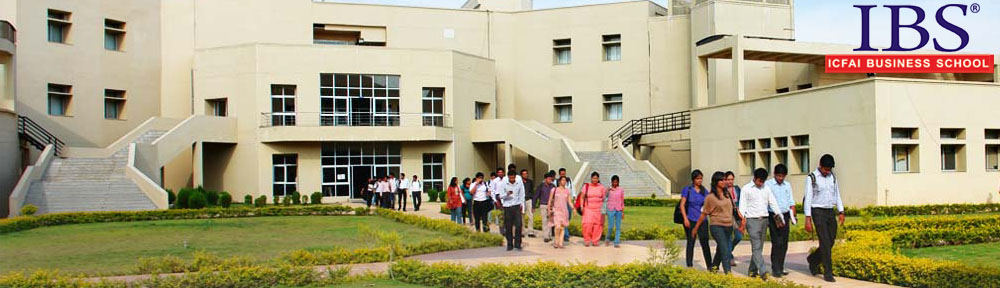
Let me tell you all one thing very honestly, when a student enters a college, the first thing he sees there is the infrastructure and very importantly “the hostel”. For me, being in IBS was a big relief. Coming from a college where I had to share my room with two other girls, getting a single sharing room at the same price was like getting an iPhone at the price of micro max. On top of that, WiFi enabled campus, two store libraries with almost all kinds of books, two canteens, two mess’, reading room and 68 acres huge campus away from the noise and pollution of city, were just like icing on the cake.

It will be wrong to say that the two years that I spent in IBS only changed my personality. What I am today is completely different from what I was two years back. A lot of credit for this goes to the teaching methodology at IBS. Being a shy girl from engineering background, usually sitting at the back corner bench of my classroom, the first two days at IBS were horrifying. As soon as the teacher entered the class I came to know that forty percent of total marks come from class participation. I still remember his words when he distributed marketing cases. “We are not here to spoon feed you. You are going to be future managers. Understand and analyze the case and then we will have class discussion”. What horrified me that time became a blessing in disguise for me. The case method not only improved my confidence, my communication skills but also made me understand the concepts in the practical scenario. Needless to say that reading the real life stories of failures and successes of big corporate houses actually improved my general awareness which helped me a lot during placement interviews.

One important lesson you can really learn in IBS is how to complete your work within a given deadline. Trust me this is very helpful for your future. Here in IBS if you are late at submitting, be prepared to get a “D” or “E”. At times it becomes frustrating but then we are preparing ourselves to be the future managers. This doesn’t mean that the faculties are not cooperative. They are always there to help you and give you right direction

One thing that I really liked about my college was its extracurricular activities. I mean it is not easy to find more than twenty clubs in one college. A club for marketing, finance, hr, debates, investments, gaming, movie, cultural activities, advertising, adventure and the list goes on. Working for my club actually gave me a snapshot of what my life would be in the corporate world, because I learnt how to work in a team, how to be a leader and of course how to do some healthy politics. You get to learn and enjoy at the same time. All India sports meet like Aaveg and cultural fest Trishna also gave me an opportunity to compete at national level.

I dint even realize when those two years in IBS passed. Now while writing this article it feels like it was yesterday only, when I used to attend college from nine to six, read and analyze cases for next day at evening along with my friends, attend my club meeting to discuss next day activities at 8, have dinner at 9:30, take a walk at 10 and finally come back to room and sleep by 12. Those were the best two years of my life and I thank IBS for making my life in a b-school such a memorable one.

Contributed By : Prachi Tewari, Batch 2013, IBS Hyderabad

Objectives behind Group Projects.

objectives copyWe celebrate the highs with friends and look for a group of people in our lows. It is good to share every walk of life with a bunch of people close to us. On the same premise, professors teaching the MBA course came with something called “Group Projects”. If you think that working in a group is division of work to achieve the ultimate goal before deadlines, then Hold On! There are lot many objectives behind grouping people together to carry out work. Let’s discuss some of them.

1.Develop Leadership Skills: You definitely get a chance to be a team leader at least once for any assignment or project. As a leader, you have to take on the role to delegate responsibilities to team members, to make sure that they don’t miss deadlines, if they are facing any issues in completing the task assigned to them etc. If they are facing any difficulty, you should be the point of contact; if there is any clash between group members, it is you who should solve it. So you see, it is just like a team in any corporate where you get an opportunity to make your leadership skills stronger.

2.Idea Sharing: The More the Minds, the Merrier it is. There comes a bump in the smooth ride of project making when you run out of ideas to carry the project any further. You reach a deadlock situation, which is exactly when group work proves advantageous. If one exhausts all ideas and goes blank, there is always another group member to pour ideas for developing and carrying the project ahead.

3.Less chance of failure: Well this one is for the ‘free riders’. Professors along with developing the team spirit try to knot few free riders along with other back breakers. They know that in case the free rider cannot perform in the last minute then there are always other members in the group to back them up by completing the work on time and hence save them from failure.

4.Continuous Learning: When different minds are involved in completion of a task then are very high chances of learning something new from everyone. Different people come with different set of skills; for instance, if one is good in preparing presentation then other might be good in presenting them. There is always some learning imparted from every member of the group.

5.Networking and Socializing Opportunities: There are more than 20 subjects throughout the entire course of MBA at IBS. Each one of them has around two to three group projects. Do the math and imaging meeting new people in every project, networking with them and being a part of this enormous social troop. This prepares you for a corporate life where every project is done in groups.

6.Decrease decision making time: Taking decisions, regardless of whether they are big or small, can be time-consuming when done alone. It can be anything from finalizing some section of the project, what should the project title be or dividing the deadlines for different stages of the project, it takes time when one is thinking alone. But when the entire group sits together and brainstorms on the same, the time is significantly reduced.

7.Working Out of Comfort Zone: While dividing project responsibilities, you sometimes get assigned some task in which you have no prior experience. For example you may be extremely good at reporting work but this time around you are entrusted with the task of making the presentation. You might be a little uncomfortable initially but since the group relies on you and expects you to accomplish the task at hand, you figure out a way to do it. So group work helps you in taking baby steps out of your comfort zone, which is beneficial in the long run. 

8.Create a Working Environment: When working individually you take more breaks than required and manage to get distracted by something or the other, thus taking longer to finish the project. In case of a group project if you are sitting with a group and working then the chitter chatter with the group itself act as a break and keep you glued to your seat.

9.Sharing of the resources: Be it monetary resources or non-monetary ones, once involved in a group, each member shares their resources for completing the project successfully. It completely eliminates the pressure from one’s head to contribute something from his or her side entirely.

10.Access to more Information: If the topic of given project is completely new for the group then proper research needs to be conducted to comprehend the project and complete it. With information search done by the group members, everyone can pool in the intelligence they have on the project and attain a deeper understanding of it. In that way if someone didn’t know about a certain aspect of the title of the project can get to know about it from the shared pool of information.

11.Growth in Individual’s Overall Performance: Majority of assignments in MBA is conducted in groups. With other people to shoulder the burden of work, you have an equal eye on each and every discipline. You can devote equal time to other subjects as well. In such a case you can observe a raise in your overall performance.

12.Identify and strengthen the weak spot: Amongst all the group projects that you are a part of, you get to be a leader somewhere and a follower elsewhere. You get your favorite section to work on in one project and other time you are a novice working on a new section. In the middle of these projects you can easily identify the area where your performance is relatively lacking. You can pin point your weak area and get to improve the same.

13.Improved Relationships: When people come together to accomplish something they become an emotional and moral support to each other. As a member of a group, it is important for one to cultivate ties with every group member. It is not only for the benefit of completion of task in a co-operative manner but it might also gainful for the career advantages.

Interpersonal learning or Group Learning is a beneficial learning strategy provided that one takes an active part in a group without taking undue advantage of the same. Lastly, it is always fruitful to come together for a common cause and learn from a plethora of things and help others with your skill set.

Contributed By : Hasan Ali Gumani (Class of 2014, IBS Hyderabad).

[contact-form][contact-field label=’Name’ type=’name’ required=’1’/][contact-field label=’Email’ type=’email’ required=’1’/][contact-field label=’Mobile Number’ type=’text’ required=’1’/][contact-field label=’Comment’ type=’textarea’ required=’1’/][/contact-form]

Proactive Mentorship in Management Education

The art of mentorship is yet to be fully tapped into and explored by the present system of management education in India. Post-Graduate programs are the penultimate stepping stones for students entering the ever evolving corporate world. The importance of mentoring at this crucial stage has been downplayed, if not ignored, by the system at large.

After 15+ years of formal education, students are thrown into the workspace to explore and fight their way towards a successful career. At this juncture it becomes imperative to have some sort of guidance from experienced seniors.

Management programs today focus on most aspects of holistic development for students, but proactive mentor ship seems to be missing.

What is proactive mentor ship?

I consider proactive mentor ship as the style of mentoring, wherein the mentor constantly tries to engage the men-tees into communicating their goals and desires, to subsequently provide meaningful advice aimed at helping the men-tee.

The keywords being: Constantly, Engage and Communication.

As someone who has not yet completed 1 full year of working, I believe I’m still a student at heart. With this knowledge I understand that students as a group are quite a tricky bunch of people. The general method of imparting knowledge (Read: Lecture based classroom learning culminating in a 3 hour exam) has sensitized students and each and every student develops a unique coping mechanism. Some may use cellphones during the class, some might doodle out their elaborate fantasies and some just wait to enjoy their class-nap. The point I’m trying to make is that students can’t be force-fed information. It’s futile to assume that when students reach the level of post graduation they will suddenly change their behavior.

Keeping this in mind, it is of utmost importance for the mentor to constantly try and guide the students. Most mentors have an understanding that students will approach them during crisis’ (Placements, choosing specialization, Internship, etc) and they will help them then. However, this approach is not fail-proof. Some students might not approach anyone just because they have not been doing it since the start.

To avoid this conundrum, a proactive mentor will constantly speak and guide the students from the start. It should be communicated to the students that the mentor is always available and can be reached through email, facebook, sms etc at any time. In an era where boundaries are irrelevant due to the social media boom, mentors must exploit this opportunity to be present for their mentees whenever required.

Another important quality of a proactive mentor is his/her ability to engage with the students. Since their schooling days, students in India are expected to respect their teachers/elders and maintain discipline in their presence. When working in a company, this behavior is translated to include the manager/boss. So, a level of apprehension will always be present with students while interacting with mentors. A proactive mentor has to understand this and constantly engage his students. He can do so with funny stories, incredible insights, personal experience and almost anything which will put the students at ease and make the mentor more approachable.

Finally, a proactive mentor has to learn to effectively communicate with his students. Unless he/she can do this, students will not be able to express their goals/desires clearly enough to enable guiding them. Effective communication is more difficult than it may sound. As most students and mentors have completely different fields of experiences’, the onus is on the mentor to understand what exactly the student is trying to communicate.

Having listed out the prerequisites of proactive mentor ship; let me now dwell on some of the benefits:

  • Students will develop a fair idea of mapping their interests/skills to industry/profile they could start their career with.
  • Students will be better prepared to deal with the corporate lifestyle and the level of commitment and accountability required.
  • Proactive mentor ship will create an environment of knowledge sharing in the campus.
  • Attrition rate of companies would come down as students are bound to take better informed decisions.

Contributed By: Abishek A Ganesh, Batch 2012, IBS Hyderabad)