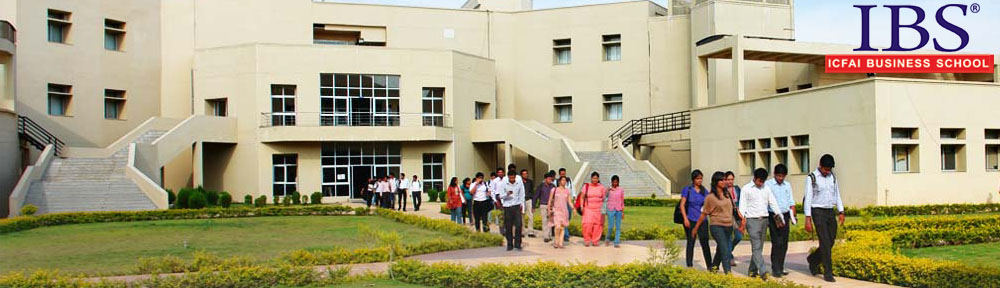
Lifestyles of MBA Students at IBS Hyderabad

10881617_10204720780292335_7413271374922832472_n

To get admission at IBS Hyderabad is quite tough. The student has to go through an All India Competitive Entrance Exam followed by an interview session at Hyderabad.

The student pays substantial amount towards fees and spends further money on hostel, transportation and other expenses. The student also foregoes his earning opportunity while he/she is studying at IBS.

The management and faculty also have an agenda to totally transform their students so that when the students pass out they are far superior in all respects compared to when they come in. The institution’s reputation has been built based on demand of its students by industry, salary packages offered to them and the height to which they are expected to soar in later years of their life. The foundation of such people building operation is laid at the institute and it cannot be taken lightly.

In view of above the student would like to make most of his stay at IBS and grow in all aspects of his life. This may include comprehensive knowledge and skills on various facets of business world, working in teams, leadership, stress management, emotional intelligence, networking, time management, effective business communication etc. The student would not like to become a book worm, but instead prefer to develop in terms of keen insight, attitude building, adversity quotient, patience, perseverance, resilience and sparkle in health. This is also the time to develop new friends, have fun, play games etc and make the stay at IBS really memorable. The whole process is complex and demands fine balancing each day.

Let’s look at a typical day for a student at IBS Hyderabad. I will take you through two different categories of students, one who is a late riser and other category which sleeps early and wakes up early. My description of those who sleep early and rise early are based on few experiences that I gained during my futile efforts to change my routine (I was a late to bed and late to rise types) and become an ‘Early to bed and Early to rise’ type. The more I tried (out of, sometimes peer pressure, sometimes internal guilt of gaining weight, sometimes family pressure, and many such reasons) the more I failed, finally realizing that this is not feasible. The realization came with lot of excuses supporting and convincing me that this is not my cup of tea.

Time Late Risers Early Risers
5:00 AM They enjoy the best part of sleep at this time, dreaming about white collar jobs, or what better than a dream of girlfriend or boyfriend (for those fortunate ones who were in relationship) Alarm Beeps and it is time to wake up, have water, get fresh and go for a walk. During this process meet few friends on the way & exchange pleasantries, smile and wish them well. Few even could be seen doing yoga.
6:00 AM Still sleeping and enjoying the bliss Plan for the day, complete assignments, read cases to be discussed in class. Some would use washing machine to do laundry (At 6 in the morning you do not have to wait for machine to be vacant).
7:30 AM Half an hour more sleep or wake up for breakfast, this is the biggest dilemma. Generally sleep wins. Call up friends and go to have breakfast in mess 1 or mess 2.
8:00 AM Get up take bath, get ready and if everything is done in 40 minutes, run to grab some breakfast. If it is beyond scope, call up a friend to get two slices of bread with butter from mess wrapped in paper napkin. Take bath, get ready and see other late risers running around and impatiently waiting for vacant washrooms.
9:00 AM Reach class running and praying that faculty has not entered class. The run becomes faster (would beat Milkha Singh for sure) if a test or presentation is scheduled. If mission of entering class is successful, a smile inadvertently comes and you are able to exchange greetings. If the run was not fast enough to beat the closing door and entry to class is denied, you end up sharing your story of how you just slept for 2 more minutes and it was 8:45 before you realized anything, with other late comers outside class. Reach class, settle and chit chat with fellow friends till class start.
9:00 AM – 12:30 PM Attend classes with few minutes of munching breaks. In these classes faculty members ensure lots of brainstorming through case studies, presentations, group projects, role plays, test, quizzes etc.
12:30-2:00 PM Lunch break. If you were not fortunate to have breakfast, this meal is a life saver. No matter what and how the food is, it is the tastiest food in the world. A time for having lunch and resting a while.
2:00- 5:30 PM Classes with lots of brainstorming and faculty members ensuring that nobody goes to sleep. However, still few would actually doze off and take a nap. Believe me everybody wants to take a small nap, especially if it’s some theoretical subject. Having said this, on the back of their mind all students know that presentations, case studies and concepts are going to decide who gets placed where.
5:30-11:00 After having snacks and tea in mess or canteen the two categories cannot be differentiated, except for the fact that those who sleep early would want the group meetings for projects to be scheduled early. The other group would want meetings from 11:00 PM onwards. Many a times both group do not agree; as a compromise a small meeting is done, work is divided and everybody does as per convenience.
Generally from 6 PM you are free to do what you like. You may chat with your friends in the canteen and eat some snacks, go for long walk, play some games, or go to gym etc. Some may watch TV, (if it is Cricket match time, the TV room transforms into a stadium, with all hooting and shouting). Proceed for dinner which is available from 8:00 P.M onwards.
11:00-12:00 PM If it is your friend’s birthday you have to be present in white canteen to celebrate. It does not matter whether you sleep early or late. You cannot miss putting cake of Birthday boy/girl face and putting anything and everything on him or her.Generally, now is the time to get to rooms and study Study for an hour and then sleep.

Packed schedule, I must admit but still on a typical day you end doing many additional things (I do not know how and when);

  • Share movies and especially MTV Roadies on intranet.
  • Browse on internet and chat on intranet/ Orkut (at my time this was a hit).
  • Crib about marks, not because you got less but others (especially your friends) got more.
  • During placement time, prepare for interviews and GDs
  • Chat with your girlfriend or loved ones on phone late night
  • Participate actively in your favorite clubs
  • Visit the city by boarding 5o clock bus and have dinner at Angithi, or Barbeque Nation or Ohris (The list is endless).
  • Visit nearby temple
  • If do not like food in mess, go to the Dhaba or Paratha stall.
  • Enjoy all festivals with tremendous zeal.
  • Play Badminton, Table Tennis well past mid night.
  • Most important, enjoy Cheese Sandwich, Maggi, Pasta and Coffee at night cafe run in hostels by students.

This would never end if I keep on writing. I might still have missed some very important part but I just re-lived the most fascinating part of my life at IBS. Thanks to IBS and all friends, faculty, staff and others who made it feel like a big family for me.


Contributed by Sumit Gulati (Class of 2009, IBS HYDERABAD)

Experience of Selection process at IBS

anju bafnaEvery positive step taken towards our goal derives success. One such important step is getting selected in the choice of our institution / organization etc. Every institution requires students who wish to progress profusely in their career. Selection is a process that involves various steps prior and ahead of it. Therefore it is important to set up a goal that is realistic and achievable based on our interests. Our goal is set from the time our learning begins. MBA is a step ahead that helps us make that goal realistic by providing us with detailed insights on how it is working in organizational environment.

Experience of my selection at IBS was a unique one as I had been preparing myself based on the requisites. I had my goal fixed to do MBA after my college and started my preparations accordingly. I made the decision to join IBS and after giving the entrance exams for the same started looking forward on the next process i.e. selection. Group discussion, talk on a topic and personal interview were the three phases that took place for selection.

Group discussion could be challenging as well as a platform to get our confidence and knowledge to get noticed. For beginners or those who are not comfortable to speak in front of a group may pose this session as difficult. I was one such person who found it difficult to speak in front of numerous people. I took this up as a challenge and started preparing for the same ahead of time. Some of the things to keep in mind are:

  • Getting mentally prepared: The first step is to get yourself mentally prepared to become a part of the GD. One needs to gear up to become a part of the group and be as confident as others. Even if you have just one or two points to share, do it with enthusiasm and passion so that you get noticed and your points are validated.
  • Conceptual Knowledge: Next step is to being aware of all the happenings in every sphere like political, business, international news etc. It is important to update with the current as well as the past news so that we have a basic knowledge on various major events that occurred during the course of time. One should understand the event and ascertain the consequences and analyze the issue based on an intellectual level.
  • Ethics: Ethics are the basic values each one of us needs to follow in every scenario. In many cases, one or two people just rule over the group and do not let others speak. Each one gets a chance to speak. Therefore when you are given a minute or two to prepare before the discussion starts, pile up the points and if possible begin the discussion with them. The one who puts the first point has a higher advantage. Also make valid points and stick to what you say. Do not manipulate the original said points and also never start fighting. Being aggressive seems a negative attitude.

The second part of the selection process was talking on a topic for a couple of minutes. IBS had provided a list of topics and one is required to choose one among them and speak on it. I went through the topics given and chose the one which interested me and would interest the audience. Choosing a topic which one could be able to speak confidently will help in speaking flawlessly too.

While choosing the topic it is important to ponder on the ones which makes one know he/she has little knowledge on it. Shortlist the topics accordingly and make a list. Finally after choosing the final topic, list down the points I wrote down the points I knew on it. I researched it over the internet and other publications. Also I discussed it with my friends to get varied points on the topic.

The most important moment comes when one has to speak in front of the other speakers and the professor who would assess. I was sure of what I had to speak and made my points clear, so that it does not create any confusion in the minds of the listener. Also choosing such points which provide newer information is preferable over what has already been heard by and large. Addressing each listener, standing in the right posture and speaking confidently are key factors for a perfect speech delivery.

The last step of the selection process is personal interview. This step would seem to be the most difficult part and one tends to get nervous. The main reason for getting nervous is because we do not know what we would be asked and secondly who would be interviewing us. Having experienced this situation I have known that is a calm and poised process. There are a few things that need to be done before attending the interview.

  • Building confidence: Even before we start answering verbally to a question, our body language speaks a lot. Therefore even before we start building our knowledge we should build our confidence. In order to do this, stand in front of the mirror and assess the posture and body language. Secondly, analyze the language and fluency of English with which you speak. Speaking with fluency provides a boost with the knowledge you have.
  • General Knowledge: Along with the current affairs knowledge, one has have knowledge about a broader perspective. Past events, political figures, business mergers and acquisitions etc are some of the key areas to focus on. Referring to G.K books and searching over Internet are some of the options to build G.K

Facing the interviewer and greeting him is the first step. Handle each question calmly and with confidence. In case one does not know an answer just say u do not know it, never say anything unrelated. Let the interviewer see the confidence in the things that you are sure about. Also he will know that you will not make things up just to impress. As it is rightly said, talk to express and not impress. Therefore focus on what your goal is and answer why you want to MBA. Choose the specialization in which you want to build a career and not blindly follow others. Lastly, leave a thought in the interviewer’s mind as to why he should not choose you. This thought will make you get through the selection process and become a part of the institution.


Contributed by Anju Bafna, (Class of 2010, IBS BANGLORE)

Infecting The Internet With Ideas

blog-inn3

‘It’s a bit like wild fire.’ Halpern Cowan Ltd. says about Marketing. ‘If there is one fire the chances of creating a blaze are minimal. If you start 1000 fires, you have a much better chance of creating an inferno!’

Starting so many fires can get tiresome and tardy, don’t you think?

Imagine a marketing scenario where a single spark manages to ignite another 1000 fires. Such a phenomenon is called Viral Marketing.

Ten years ago, in the ever-diverse Advertising industry, the marketing strategy for this study stemmed from the premise that a satisfied customer will categorically spread the word.

A viral marketing technique performs as a self-replicating process and urges users to voluntarily pass on the communication to other users. Infecting the Internet with an idea, the aftermath of the technique is thus compared to the spread of a pathological virus.

The concept of Viral Marketing can be better described as the rapid sharing of interesting ideas on pre-existing social networks to propagate brand awareness and prompt action resulting in purchase of a product or service offered.

The social networks can be organic (word-of-mouth) or online. The aim is same – To create an exponential growth in the communication’s visibility and influence.

The life span of a standalone word-of-mouth marketing campaign usually is rather short.

The Internet, on the other hand, gives Viral Marketing more personality and a broader presence.

Nowadays anything worthy of interest or entertainment is speedily shared electronically between Internet users; war-stories to music videos, celebrity break-ups to grumpy cats, outrageous memes to sleepy children. The simplicity of sharing information has grown and become more perceptive because of smartphones and other devices that are facilitated with Internet. All one has to do is scroll down and click on the ‘Share this to…’ button to practice referral marketing first hand.

If we look at certain online products that went viral such as Facebook, YouTube, Gmail, and Craigslist, we realize the huge potential customer base that is available to us through these networks. Since these products improve as more people use them, they motion ideal viral marketing opportunities.

Marketing agencies work towards creativity that can grab most eyeballs. MTS Telecom ‘Internet baby’ ad is considered India’s most Viral ad today. A representative of the company explains how it was launched in an innovative way, “by seeding the spot as a BitTorent file and letting the country’s digital natives find it on their own.” Released in 2013, Dove’s ‘real beauty sketches’ and Evian’s ‘baby&me’ viral videos have garnered over 64 and 96 million views on the US YouTube channel.

blog-inn1

*Google Trends

Agencies have realized that the chances of producing a successful buzz are greater if viral marketing strategies have covered the basics like

  • Extraordinarily designed content,
  • Effortless transfer of communication,
  • Capitalizing on basic motivations,
  • Building on existing communication networks,
  • Being resourceful, and
  • Offering value.

Advertising Strategists take special care on the following aspects of a Viral communication-

1. Headline

The reader usually looks for an indication of value in the Headline before proceeding over to rest of the content. If the headline manages to spark their interest, the message is more likely to be delivered. Experts recommend adding symbols or numbers to make the headline more striking.

2. Topic

For the communication to spread like a wildfire the topic must be buzzworthy. Current news and trends are liable to ripple the most.

3. Links

It is important to put in links to prompt the reader to take projected action and to provide supplementary information.

Several Marketers in the Entertainment business turn to ‘Prankvertising’ to inject humour into the message endorsed and footage captured.

If you look at the highest-rated videos on YouTube, they’re not sad dramas, they’re men getting hit with inflatable balls or animals falling off things. Younger generations love humor, which is why advertising is using increasing quantities of it to sell things. People like it. It works. – Craig Allen & Jason Kreher (Wieden & Kennedy)

A coffee shop in New York was transformed for a ‘telekinesis’ camera stunt in order to promote the movie ‘Carrie’. The resultant video has also crossed 60 million views to date.

More recently, the ‘ALS Ice Bucket Challenge’ created ripples, raised special awareness of ALS and acquired considerable donations by triggering interest and involvement of every Celebrity-worth-his-social-media-salt along with the global-public.

For palpable reasons, Viral Marketing has been decreed as the leading medium for future campaigns. For one, the cost for commercial advertising space is a great deal lower than that of other media like Television or Print. The costefficiency of this type of marketing is a huge plus for the Advertiser. Such lowcost advertising in a worldwide market allows the marketer to target the masses. Moreover, repetitive views and clicks on social media platform ensure greater frequency of advertising.

Another pronounced benefit of Viral Marketing is how accessible Consumer feedback is made through it. Viral Marketing campaigns often provide an interactive platform for their target audience, which allows for a stronger brand involvement. For instance, The Dark Knight campaigns unlocked exclusive sneak-peek trailers through interactive participation, and invited fans to join related rallies / events.

Viral Marketing despite its wide reach, like any other of its field is not without its limitations. The well-established companies frequently use it as reminder advertising but the start-ups who begin with such advertising are viewed as lacking in credibility. The average Internet user does not appreciate pop-up advertising and resorts to spam filters and blockers.

Seth Godin mentions a common blunder that marketers make when dealing with a poor product, small budget and/or little time.

“They slap some goofy viral thing on top of it and wait for it to spread. And if it doesn’t spread, they create a faux controversy or engage a PR firm or some bloggers and then it still doesn’t work.”

Things like static advertising, making promises that cannot be kept or posing as a consumer, all depreciate the image and goodwill of any brand.

Effort needs to be made by Viral Marketers to keep the brand relevant for the consumers.

Companies can’t just keep talking and saying the same old things. They need to listen, interact, and be somewhat interesting, just like any person who wants to be taken seriously. – Linus Karlsson & Paul Malmstrom (Mother New York)

After weighing all its traits, we advocate Viral Marketing as a viable option for the future, given that the advertisers execute their campaigns with integrity.

With technological advancements that continue to change our world of Viral Marketing, new boundaries will be charted and old ones will keep on getting crossed, as marketers strive to infect the World Wide Web with their creative ideas.


Contributed by Ankita Verma (Class of 2009, IBS Hyderabad)

HOW I MET MY SELF

deeba

It’s said that in the journey of life, each day is to be lived to the fullest, so that on looking back you have a grand story to share. In this story, there are phases that define the entirety of the narration. Keeping in mind the vast expanse of Indian diaspora, I am sure many of you will be undergoing a phase that I am going to touch upon today.

The exam fever has subsided, leading to the result declaration mode that brings another upsurge of emotions. Some results have been announced whereas some are yet undeclared. Nevertheless, everyone plans for the big win at the best institutions. Just a few years back, I too was a part of this roller-coaster.

Though I graduated in engineering, I knew it was not my calling. But hey! One can find small bursts of freedom even in the times of chaos. So the “extra” in our curriculum had always been where I found my solace in and it is from those times I found my pathway to a career of my choice. Managing and organizing events, handling people and resources was my forte. Voila! MBA became my stepping stone to attain professional nirvana.

It’s easy to fall into the generic trap of the run-of –the-mill institutes or the traditional pathways to get my desired degree. I already had that share of stumble so was careful in making choices which balanced my caliber, aspirations and resources at hand. Being from a small town with limited availability of brick and mortar aids to pave my way towards my dream course, I resorted to the internet and made it my mentor. Considering the stiff competition at pan India level and rigorous preparations done by the well endowed candidates, I made up my mind to strive as hard as I could. And play my chances in a way that whatsoever be the outcome, it would not deter my faith in myself.

Like many other aspirants, I tried my hand at a decent share of competitive exams to get an entry at the various prominent B-Schools. Each exam was escorted with its share of highs and lows in my overall preparative process. After the tides of testing our intellectual caliber dropped, strong waves of how we fared in those tests washed the shores of our young minds and hearts. Many hopes drowned and many got a chance to float too. This was the time when I came face to face with my first encounter with what can be called “A life changing gesture”.

IBSAT, as we all know is a doorway to enter the prestigious ICFAI/ IBS institutes. For me, its result bought with it a grand invite to its swanky ICFAI, Hyderabad Campus. I remember how I trembled at seeing my call-letter and the immense planning of how I, along with other friends who cleared, would attend the 3-Day event of Seminar, GD and PI.

After taking care of the travel and stay arrangements, came the realization of how to approach the process as the competition would be immense and this time it was about the battle of wits and knowledge. So in came the “Google-Baba” as we fondly called the mighty search engine. Lapping up all the tips on the how’s and what’s, I worked on the inside-out approach. Rather than adjusting myself to the external stimuli, I somehow went on an insight method where I began with a SWOT and progressed to find how a degree with ICFAI would be a mutually beneficial accord.

I had read somewhere, ‘If you have reached the group discussion and interview level of testing, there is hardly ever one bad quality in you that will result in a rejection. There might have been many others who could have been at your place. But they are not. You are selected because you are better than thousands of people who appeared for the exam. So, it can never be only your academics or only lack of confidence due to stammering or any other reason.’ Now after covering my basics, I had to strengthen the bond between my vocal chords and mental synapses.

This is of course not to say that a person’s history as a student doesn’t matter. I too did not have a very glorified resume to share. But when you are in a GD-PI round in a top B-School, you are competing with equals. Everyone will have grades to show-off and certificates in extracurricular would be dime a dozen. It will eventually come down to areas like your mannerisms, focus, analytical & listening skills, and many such aspects that will distinguish you from others.

So armed with my passion to do my best I set path on the journey to IBS, Hyderabad. The whole episode of reaching at Nagarjuna office from the airport and then being hosted well by the management at the university felt like an onset of a life-altering phase. Interactions with students and parents from all across the country under one roof were uplifting and helped me gain first-hand knowledge on the current state of minds of our care-givers and us. It felt like a beautiful potpourri of wisdom, ideas, aspirations, ethnicity, and beliefs.

I have never had much to fear the group discussions as I had a decent exposure to public speaking and the support towards reading from my family aided me in my communication build-up. Yet, the competition was driving my confidence to the edge. Keeping my head in place was posing to be difficult as information overload at the venue and the effervescence of selection kept my brain abuzz.

Selection Process Day 1- The excitement of this day gave me a restless night before so I began my day early by savoring the delicious offerings at the mess and calming my nerves through the warmth of food. The seminar began at the stipulated hall and gave an excellent view about the development of ICFAI institutes and various courses offered in the management domain along with how each one had a niche growth prospect for national and international markets.

Then followed our GD session, where we all were supposed to reach at the lecture halls in the main block as per the shared time slots. On reaching at the setting, I remember being unable to move my feet into the lobby I felt as though they had turned to lead! And suddenly I had a sweet lady by my side confirming the details of where she had to reach. We had a brief chat about the GD groups we were allotted and wished each other well. Somehow this acted as a prep talk and I finally entered my GD venue.

A lady and a gentleman sat as moderators facing a semi-circle seating arrangement for us. Few candidates had already settled in the room and I was directed to my spot in the group. In a little while, the room was filled with around 7-8 more students who took their seats. I remember feeling my hands and feet going stone cold as one of the moderators gave their introductions and asked us to follow. My attention was caught by the lady speaking on the development of the country and how we as future managers would aid in the same. She then proceeded to write our GD theme on the white board, “Should politicians be sent to B-School’s”. We were given 5 minutes to gather our thoughts and she would finally call in for the discussion to commence.

My mind was whizzing with ideas for pros and cons of this subject. I jotted down all the pointers on the given rough sheet till our time to discuss the same began. I took the plunge to initiate the conversation by citing a recent news article that favored promoting and practicing executive MBA at leading institutes for the political personnel and its consequent benefits. This brought in a flurry of responses both for and against such a proposal. I too tried my hand at covering all aspects of this issue like having a minimum level of education guideline for the politicians, to incorporation of educated youth in the political arena and upgradation of the level of education to generate better citizens and leaders. The GD ended with each of us getting a go at our conclusion to the discussion. The rest of that day passed in a blur and I found myself waking up to the PI day.

Selection Process Day 2- They say every interview is built from the answers of the person being interviewed. So I kept in mind what were the areas that I would like to highlight and how I would be able to justify my humane weaknesses. The PI’s too had been set for students at various lecture halls at different time-slots. I had mine somewhere close to noon so my tête-à-tête at home and with friends helped me build my case and got me pepped. I had made-up my mind that regardless of the result, I would make sure that I take back only the good memories of moments spent at IBS campus.

Arriving early at the place of PI gave me a view of the ambience at IBS, soon I heard my name call by the guard outside the lecture hall and I stepped in. I was met by a veteran who gestured to sit. We shared our pleasantries and he asked for my resume. Unlike the day before, I felt more confident and prepared. I felt no major hiccup in our chitchat. Questions were covered about what made me move from a technical field into managerial arena, what my aspirations were and how I aimed to achieve them.

I was quizzed about my hobbies and how I felt they help in defining me as a person. In our discourse, I realized that the interviewer had a technical background as he touched upon some aspects of my trainings and projects. A couple of vivid questions that I remember are: “What are you three major accomplishments as of now?”…which was followed by “What are the three mistakes of your life?”- to which I responded that I consider mistakes as learning curves and ‘Three mistakes of my Life’ is the title of a popular Chetan Bhagat novel. My last points of closure were on the highlights of living in a small town. The meeting ended with my feedback to him and best wishes to each other.

I left the room with a sense of accomplishment as I felt that a PI is basically meant to know you as a person. Because I had already attempted to gain insight on knowing myself before I began my journey towards my masters, now the IBS Selection Process did not feel like a stumbling block in my path. Little did I know that this was just the tip of the iceberg.

Few weeks later, I received an acceptance mail from the IBS fraternity citing my eligibility to apply for the IBS campuses and their courses. As the summer set in, I had closed my deal to get exposed to the world of management at IBS-Gurgaon. The choices and learnings that followed in the two years of my masters at IBS strengthened me as a person and helped me grow exponentially. My stint with each and everyone at IBS, be it the students, teachers or helpers; assisted in bringing me closer to know who I am and how can I be better each day.

Though its been quiet sometime since I have left my alma mater, but I still feel a part of me shall always live there. “As has often been said, the youth who loves his Alma Mater will always ask, not ‘What can she do for me?’ but ‘What can I do for her?”―Le Baron Russell Briggs.

Contributed by Deeba, (Class of 2013, IBS Gurgaon)

Market Yourself Properly: Create A Superior Linkedin Profile

“A year from now, you’ll wish you had started today.”
– Karen Lamb

You probably know what LinkedIn is and already have a profile floating around. But for the uninitiated, LinkedIn is a business-oriented social networking service launched almost 12 years ago on May 5, 2003. As of June 2013, LinkedIn reports more than 259 million acquired users in more than 200 countries and territories. (Source Wikipedia).

You know all this and yet the number of your weekly profile views is in single digits and endorsements are far and few. Is there something that you aren’t doing right? Something that you could do different? Well, there could be plenty. Below are some tips to spruce up your LinkedIn profile and make it a great marketing tool when you aren’t present in person to present your case.

1. Start From The Basics: A Profile Picture

Often, first impressions are the last. A decent looking profile picture establishes you as a serious candidate and goes a long way to get you noticed. But keep it professional. Selfies and arty profile pictures are a no-no for MBAs. So don a smart shirt, think of a happy moment that’ll make you smile and get a friend to click you. This might take some effort but then remember, that profiles with photos are 11 times more searchable.

2. Draw Them In With A Headline That Shows Intent

A headline is what goes below your name. It’s what pulls people in to go through your profile in more detail. Make it boring and they’ll move on to the next candidate. So what constitutes a good headline? It should be keyword rich, and in your case of a hot shot MBA, it should exhibit intent. Include your current position (e.g. Marketing Major at IBS Hyderabad) and keep it crisp, not more than 10-12 words.

3. Keep Your Page Bubbling With Activity

Now agreed that this isn’t Facebook where you like to update your status regularly and share interesting stuff with your contact list but articles related to your profession can be just as interesting. Or in the case of LinkedIn, just as relevant. So when you come across something meaningful and insightful, don’t keep it to yourself. Share it by all means. It is also an indication to your prospective employers that you’re active and are hence more likely to respond quickly if they were to contact you with an opportunity.

4. Get Recommendations To Do The Hardwork On Your Behalf

Remember orkut days when testimonials made your online persona a lot more desirable. Well, things haven’t changed much. Only got a little more professional. A good recommendation is a testimony of your skills and aptitude. And it doesn’t take too much time. However timing is of essence. The best time is after successful completion of a project. Your contributions are still fresh in mind and the person recommending you will do most of it on his/her accord. Also, try and get recommendations from different sources. A colleague is more likely to talk about you being a team player while a mentor might recommend you for leadership skills. So pick up the phone or drop them an email and request them while they’ll still oblige you.

5. Belong To A Group

“A man is known by the company he keeps.” Given the context, the proverb couldn’t be truer. LinkedIn groups are hotbeds of activity where like-minded people from all across the world convene, discuss and share ideas. The discussion topics are current and a vast pool of knowledge. And since you’re just starting out, should you find yourself in a bind, you could take guidance from more experienced group members.

A group is also a great way to build your network and it often happens that group members by sheer association get a first shot at a job opportunity posted in the group. You may also get first invites to events such as a webinar, book signing, product launch etc. A feature called ‘Group Statistics’ creates statistics for every group about group size, comments, discussion etc. that is a useful tool for you to gain information about the professional background of other members and something that’ll help you evaluate whom to connect with one on one outside the group.

6. Harness The Multimedia Capabilities Of Linkedin

Did you know that you could include rich media content in your LinkedIn profile? Slideshare presentations, infographics, videos and more. All of this adds both weight and glamour to your otherwise text heavy profile. The key here is to be detailed in your descriptions and make the experience interactive. Surely, there’s a learning curve in getting to know the features. But the quantum leap it can give your profile will be worth the time and energy you spend on it.

7. Don’t Forget The Obvious

Now, we haven’t really touched upon sections like summary, education and work ex. Well, those are hygiene and LinkedIn has made it fairly easy to enter the information in a standardized format.

You needn’t get into details of your school life. The name and year of passing out should suffice. You should be a little more detailed about your graduation and post graduation as those were your formative years. Detail out your work-ex and put some weight behind it with recommendations.

There’s also a section for Achievements. As an MBA student, it gives you the scope to highlight what you’ve been up to during MBA and before. Arrange them in an order that’d most appeal to your prospective employer. For instance, you may have stood third in a New Product Launch competition but may have actually won a singing competition. Both are incredible achievements in their own right but to a marketing manager looking to hire a young gun, you being able to launch a product in a market, even if hypothetically, would probably make more sense.

So, this is it. Some very practical and doable tips to share your personal brand story in the form of a LinkedIn profile. I hope you’ll find merit in these to help you stand out from the clutter. Have a great beginning to a new year.


Contributed by Himanshu Saxena, (Class of 2009, IBS Gurgaon)

My Journey to IBS

This article is addressed to the students who are preparing for IBS Group discussion/ Personal Interview (‘GD’ / PI’)


Honestly speaking, I wanted to pursue my MBA from IBS Hyderabad but it could not happen. So I had to settle with Ahmedabad campus. But when I go back in past and remember how it happened, I feel that even Ahmedabad campus was earned the hard way.

How I prepared for written exam?

As I was preparing for CAT examination like most of the MBA aspirants do, I did not do any special preparation for IBS written exam. I appeared for IBS written exam i.e. IBSAT on 16 December 2007. I attempted good number of questions and was hopping that I would get a call for interview from this college.

My preparation for the interview

As soon as I received call letter from IBS for my selection for interview at Hyderabad, I started working on cracking this interview and securing admission. As I mentioned, I was preparing for CAT examination, I had fairly good idea about the process.

(Tip for MBA Aspirant friends – Prepare for CAT exam so that you can appear in all other entrance exam and crack them too)

However not being over confidant, I started searching about IBS specific questions from internet. I used to dosearches randomly like ‘IBS campus interview questions’ and ‘questions asked in IBS interview’ on google. By this way, I gathered common questions from different search results and prepared for these questions.

At that time in 2008 (January), IBS was using different type of admission procedure.As you clear the written exam, you get a call letter. Further,along with this letter,IBS had given a list of topics to students and out of these topics, students had to choose any one topic and present it before the jury at Hyderabad campus during the selection process. The range of topicsprovided was very wide and thus was making it difficult for students to select one. Finally, I freeze upon one unique topic from the list, ‘Coalition Government in India’. I selected this topic considering my interest in current affairs and politics.

Then, I started preparing presentation for this topic. I searched about history of coalition government in India, gathered facts aboutit;made notes and finally prepared a nice presentation (I thought it was niceJ).

It was my first of its kind presentation and that too for MBA admission and hence it was a big thing for me. As you know that such thoughts can make any student nervous so I also felt nervous about it. But I believed that everything would turn good. With all these preparations, I sat in the train from Baroda and reached to Hyderabad for the first time in my life and that too alone.

The D-Day (Day of interview)

Presentation Part

As I mentioned, it was my first of its kind presentation, I was feeling nervous. As soon as my turn came for presentation, I was literally shivering. Anyhow, I started presenting my thoughts but my voice was breaking in between due to nervousness and I could felt it. I completed my presentation anyhow beforethe jury. The jury also did not trouble me much except for one or two questions form presentation for the sack of evaluation.

Interview part

After this, there waspersonal interview round. I almost gave up the hope for admission due to my experience of presentation but I had to appear for interview as I had travelled to Hyderabad all the way. With this thought, I entered into interview room and my fortune changed. The panel presented in the room made me comfortable and then started asking me questions.

Here, I have tried to put myinterview conversation in the actual question and answer format which is as below.

  1. Interviewer – So Janmang, tell us something about yourself and about your background.

         Janmang – I gave my brief introductionand family background

Advice – Prepare your brief introduction perfectly as mostly all interviewer starts with this question only.

  1. Interviewer – As mentioned that you are from bhavnagar, a city in the state of Gujarat, do you know anything about ‘Alang ship breaking yard’?

Janmang – I said yes and replied that Alang is a famous ship breaking yard near Bhavnagar.

Interviewer – He felt good. Another question, what do you know about recent controversy related to Alang?

Janmang – Alang is in news recently for a ship called Clemenceau. A ship from France was anchored in the Alang which was carrying Toxic Chemicals in it. The Indian environment ministry did not allow itto break at this Alang ship yard with the fear of toxic chemicals spreading out in the Sea. Hence,due to Clemenceau ship, Alang was in news.

Advice 2 – Gather information from where you belong and also about surrounding places. There are always high probability that you will get at least one question about it.

I was regaining my confidence as the interview progressed. And then came a final blow

  1. Interviewer- What is the recent controversy going on about McMahan line?

Janmang – Mcmohan line is situated in the North East Frontier Region ( ‘ NEFA’) and China is not recognizing this line as border and hence there is a dispute between India and China for this reason.

(As I watched this news just a day before the interview, I literally rattled this information before the panel)

Interviewer – Good Janmang. Can you please tell me our current army chief?

Janmang – With in split of second, I replied – Major General Deepak Kapoor

Interviewer – Excellent Janmang

Janmang – Thank you sir

I think that 5 to 7 minutes decided my journey to the IBS. I walked out from the interview room confidently with the thought that I would get admission in any of the IBS campuses.

Advice 3 –(Before appearing for any interview, get information on what are the current trends, what is there in news in recent past. And there are always high probabilities that you will be dragged in to detail discussion via questions from current affair segment)

Eagerly waiting outside for more than 3 hours, we were called inside the hall from where we would come to know about future. There were envelopes with our fate sealed in.

As soon as my name was announced, I rushed to receive that envelop and opened it. And bingo! I was given admission in the Chennai campus. I called at home to parents and then to my best friend to give them good news.

Lesson learned in life

One thing I learned from this incident that the situation can change any time. Be it good or bad. So our responsibility is to be readyto face both good and bad situations whichever comes to us. You never know when your time changes.

Good Luck and all the best for very bright future to all my friends!

Contributed by Janmang Mehta (Class of 2010, IBS AHEMDABAD )

Growing Importance of Data Analytics

13-4-feb

A chat with a close friend and as usual we had a hearty laugh about how we have always been evaluated on the marks we got and the ranks we secured during our school and college days. What immediately followed was a moment of silence as we checked with each other, have you met your Q3 targets? With all other thoughts flying out of the window we thought isn’t it still about numbers? Indeed it is! We are in a competitive world where a lot of the details are getting organized, monitored and recorded and we get judged according to the numbers or data recorded. Interesting market trends suggest, slowly all the sectors are building a data bank and are trying to dig deep and find some correlation in it.

So what is the hue and cry about DATA Analytic and the need to decipher DATA!

As we know the economies across the globe are opening up, with rapid globalization there are number of multiple brands in each category of products. Take the case of India and our consumer is receptive to multiple brands within sectors, whether it is Banking, Telecom, FMCG, E-Commerce etc. The numbers of consumers are also increasing in the market but the growth is still limited in comparison to the brands being introduced, with large supply and lesser demand there is an ongoing battle where only the fittest will survive. Today we also have multiple platforms especially after the advent of social media where we can evaluate effectiveness of products and its campaigns. As a result the massive data collected are no longer sitting in the archive lab of a brand, instead there are specialists who are being hired to study the data and derive a coherent pattern to understand the consumer behavior from it. For Example: In layman’s language, Kerala has a huge expat population which is working in the gulf, there is country specific data with the telecom operators to back it up, so a simple study would reveal that a drop in tariff from one mobile operator in its rental plan shifts a lot of consumers to use the economic services in comparison to their telecom operator rivals, thus with the kind of data being produced today brands are in dire need of people who can analyze the data and help in informed decision making.

How can the reading through numbers help few Organizations (Feel free to think and add more to the list!)

Few clear-cut trends which I can think are hugely benefited from analyzing data are as below:

Understanding Consumer Behavior:

The most important aspect in any business success and continuity is its ability to understand the existing and prospective consumer’s behavior. There is no rocket science to the aforementioned but with developing tracking tools and plethora of analyzing techniques, there are companies which have dedicated units which are working on Consumer Insights. Such organizations usually work with a Research Agency on ground to collect data across the market and then sit and predict the future patterns.

Understanding & Evaluating your Employees:

Today all the large organizations have prudent methods of evaluating their employee’s feedback and output. All the assigned activities are quantifiable and data is effectively collected by the concerned departments. If these organizations do start digging deep into the data available they could very well devise what are the key concerns of the employees and implement methods to devise corrective plan of action. On the other hand for an employee who is struggling at work could possibly be helped by the department head reading his performance data and assigning him work which he excels at while working on his developmental areas.

Improving Governance and Security:

The earlier too were largely targeted at an organizational level, where we focused on the internal and external customers. Collection of Data and analyzing it could also be helpful in implementing effective governance and reduction in crime rate across our country. For example, if the data suggests that a certain community in an area has been the highest contributor in children trafficking along with the probable reasons behind it, the government in collaboration with an NGO could build and implement a program in such community by which the people can be educated and counseled for overcoming such malpractices.

Key Skills required in making a career out of analyzing data!

As the market is shaping up, the road ahead for brands getting tougher with every passing day. There will be new entrants in the market and that will be coupled with some of the bigger players exiting and the churn will be higher than ever before. With the markets getting more organized there will be massive available data and with it will be a high demand for people who can analyze the data and draw insights on the basis of it. There is / will be a specialist field for it but for now, one who can adapt and form a command over these roles will definitely be a winner in the next few years, as by then the trend will be their friend, with these jobs becoming coveted in the market. Following are few basics skills required for one to get into a Data Analytics role:

Comfort in handling Data

Are you the one who always looks out for reading the graphs and analyzing the market condition rather than go through the full page of written text? If yes then you can find solace with a highly rewarding career in Data Analytics.

Good with numbers

No one wants you to be the next Archimedes but you shouldn’t start sweating with the idea of number crunching. Someone who enjoys a healthy challenge with numbers can certainly try his hand in this field.

Reading through the lines

Yes having a streak of detective will do wonders for your prospect in this field. Not only you need to crunch data and numbers but this field also demands you to draw a behavioral pattern or immediately propose to shoot down a product launch idea as you can infer more from the data than someone would normally do.

Communication at its best

This is definitely one job where you cannot be politically correct, on the basis of your knowledge, gut and experience you will have to call a spade a spade. Moreover whatever one deciphers has to be communicated in its simplest form to all the stakeholders involved hence clear and effective communication is a prerequisite in such a role.

Pervasive across all industries

One of the leading users of Data Analytics is the sport industry, with players being bought or sponsorship money spent is being finalized on the inputs of Data Analytics so those who are wondering that this field might be limited to conventional industries may be prepared for a surprise.

So for all those who are looking to build a career in Data Analytics / Consumer Insights can look at the aforementioned with lot of excitement and interest but with one piece of advice that please be patient with the job role as it is still evolving, however it is likely to be one of the most coveted jobs in the times to come.

Contributed by Gaurav Sharga, (Class of 2010, IBS Gurgaon)

Two…Five…and 10 years after MBA?

3

Five years ago, my MBA degree was my biggest asset. Today, I use its photocopy to apply for a business visa. But the pointis, I still have it and I still use it.

There could be several reasons for you to do an MBA. It could be to fulfil your father’s dream. It could be a matter of pride for you, or may beit is to achieve the best possible career. But how many times do you really dig deep and do a long-term post MBA career assessment analysis? Do you think how much your MBA will be worth after five or 10 years? Most of us do not do that and that is why, it is time that we take a systemic approach and apply predictive judgement to our career.

2 years after MBA: your degree appears in ‘bold’on your CV

When we are fresh out of an MBA college, our degree and specialization are our biggest strengths. We highlight our college assignments and summer internship experience and talk about them in placement interviews.Our only aim is to market our projects and scores to get a decent job. We hardly ever think- what next? I am sure very few of us ask ourselves – for how many years will my MBA degree get me a job? Will my scores always be considered so important?It is in your interest that you answer these questions, or at least think about them in advance, to deal with the competition.

5 years after MBA: your experience matters more than your degree

Five years ago, I remember people introducing me to other team members by just saying “he is an MBA in finance”.  Today, they introduce me by what I have achieved in the company or my expertise. An MBA is a way to distinguish you from others in the workplace, but only for the first few years.You need to map the journey for yourself later.

Coming back to my point about the validity of anMBA degree, students must take a very informed decision regarding their placements. Their experience of working in a corporate, their understanding/knowledge of the business environment and processes will play a greater role in defining their long-term career rather than just the MBA degree.

So the next logical question is – how doyou do that? Here are some tips:12feb_2

  • Prove the MBA perception right

MBAs are perceived as people who have gained significant theoretical knowledge of business and are ready to apply this in the real world. They are expected to solve complex business problems and work across dimensions with ease. You can best gain from this perception by proving it right. By this I mean, you must get so deep in the business and its processes that you actually come out with practical solutions. You must take the lead in building teams, creating project plans, measuring output and reporting it to the leadership. By doing this, you will gain exposure to a variety of business aspects and develop expertise in select fields as well. This expertise will help you grow in the same organization or others. At the same time, this experience and expertise will complement your MBA degree.

  • Broaden your knowledge basket

Once you have gained expertise in a particular area, you must also consider expanding your understanding of other domains. For instance, you joined an operations set-up of a bank, and you have understood that function completely. Now it will be a good idea to look for an opportunity in other functions of that bank, such as sales and marketing, credit policies etc. By this I do not mean that you should neglect your core focus – operations, but broaden your knowledge base.

  • Make yourself important

An increasing number of MBA schools across diverse disciplines are churning out a higher number of post graduates. In such a scenario, it is important to stay competitive and relevant to business needs. One of the key ways of doing this is to make yourself important. There could be many people talking about a vast number of MBAs in the market, but you need to keep yourself distinguished—the way you graduated five years ago. The skills and knowledge you gain in your corporate career will give you a chance to make yourself unique. However, this statement is to be dealt with caution.There is a severe risk of getting lost in the crowd. You must be updated, business ready and relevant at all points of your career to be ahead of others.

10 years after MBA: a sustainable career welcomes you

I am confident that having acquired several business skills post your MBA, you will have a sustainable career in any organization or your self-started venture. You will be placed much more comfortably than some of your peers with your MBA degree complementing your growth. Although the significance of your degree may diminish over the years, it will continue to play a key role at various instances. For example, the eligibility criteria for a certain position in a company may always require an MBA degree, or applying for senior freelancer role may have an MBA as a minimum requirement.

What does it mean for you?

Credentials always strengthen your profile and so will your MBA degree

An individual builds his/her credentials over a lifetime — step by step. None of these credentials are less or more important. They are all relevant and critical, but their importance depends upon the stage of one’s career. While an MBA degree will be most important in the early stages of your career, skills and experience become more important at a later stage. Everything you acquire during your career is yours and of utmost importance. Make sure you use it at the right place and right time.

Contributed by Virag Jain ( Class of 2010, IBS MUMBAI )

My Experience of the “Selection Process” at IBS Hyderabad

suchin kulshreshta copyThe selection process at IBS Hyderabad consists of Group Discussion (GD) and Personal Interview (PI). The final selection is based on previous academic record coupled with the candidate’s performance in GD and PI.

I was selected for ICFAI B School, Hyderabad few years back. Since selection process is coming near for the current year, want to share my experiences to help those who are going to appear in coming days.

  • Even though the reporting time was 7:00 AM, I reached at venue by 6:15 AM, so that I can be part of earlier Groups (A or B). Each group was consist of 10 members with varied experiences and bachelor degrees.

First Phase- GD:

I started my GD preparation seriously only after the IBSAT results. I used to read the newspapers and articles from various websites and magazines. I also prepared from the preparatory material provided by coaching classes. I had also enrolled for GD preparation in coaching classes, which helped me learn how to gather my thoughts and communicate them in a actual GD atmosphere.

But, an aspirant shouldn’t wait for results to be out to begin the preparation. Preparation for GD should begin at this very moment, because the earlier we start, the better. There are two vital criteria one should keep in mind while preparing for GD.

  1. Knowledge: It is very essential. Knowing about current affairs helps one accumulate points that can be put forward in GD. It would also help the aspirant come up with points to chip in when the GD is not going in right direction or when there is no different aspect to GD that can be provided.
  2. Communication: Just knowing the topic won’t help in a good performance. The importance of GD is communicating what you know. So listening and putting across the points in an understandable manner is equally important.
  • On selection day, the overall process was really smooth. There was no fish market and everyone got enough time to raise forward their points. The moderator/observer just gave us the topic to discuss and said we’ll get around 10-12 minutes to discuss, with a 1 minute in beginning to gather our thoughts. We were asked to summarize in the end. The group size was seven for my GD. The topic was “Political parties or voters; who are more responsible for criminalization of politics in India”. I had read a lot about politics and knew what points I wanted to raise. I gave a couple of examples from recent happenings. I had my view that both Political Parties and Voters in some way were responsible for the criminalization of politics and had points that supported this view. My logic was based on the fact that the voters are the one who elect political parties into power. Secondly, there are people who don’t vote or vote without knowledge which eventually result in wrong parties coming in power. Also, the false promises made by politicians was a concern, Where in the genuine voters are taken for a ride and the promises are not kept subsequently. The group was pretty much in unison with regard to the topic and there wasn’t any disagreement as such.

Second Phase- Interview:

Get well prepared. Go for versatile reading and mock personal interviews. Questions could be framed on your views expressed in GD. So be ready to effectively answer the probable questions based on your GD performance.

Enjoy the generic and specific questions in PI:

A top notch Business school personal interview can go for specific questions related to your work experience, your goals, your strengths and weaknesses, your grasp on your favourite subject and the things you might have filled up in the form. There may be generic questions based on broad aspects like “ Tell about yourself”, “ How do you OR Where do you see yourself 5 years down the line”, “Why go for MBA after Engineering”, etc. Such questions make you a little relaxed since you already know what to put forth as the answer. However, the more important thing is your approach and how you respond to it.

For example the common question “Tell us about yourself” may not be answered by telling your bio-data, it is already available in the form you filled up. Repeating the same will be a waste of time creating a bad impression. Please also do not speak something stereotyped or something which appears having been practiced before the mirror number of times.

On the contrary, you could narrate some incident highlighting your personality but be brief. You could also answer like-Apart from the details in the form submitted; I am a quick learner and learn from mistakes. I believe in human values, a sharp and clear vision of life. I am confident enough that the various levels of learning that I have had till now and will have in this Institute will help me to bring out the finest of me which will enhance my competence, aptitude and skills.

Avoid Irritation

Don’t get at all irritated, come what may. Your interviewers have the capability of assessing you with your gestures, postures and the response you come with, to their very first question. The saying ‘First impression is the last impression’ is true to a large extent. When you face the interview, after the first few minutes the interview board is simply confirming itself of your first impression.

Avoid figurative communication

Use simple and communicative language in an effective manner.  Any wrong use of figurative and idiomatic language in conversation might get you deviated and put you in trouble. Sometimes the panelists could get deeper into the selection of your words asking for further explanation of the same. Hence it is better to avoid it.

Be skilful: Drive PI to your knowledge domain

Try to take the interview board to your domain of knowledge and skills.  When you answer a question, you may use such sentences and words on which the interview board gets curious but you are comfortable with the same. It depends on your skill how to mould the interview to your desired direction.  The opportunity is to be created by you while presenting the answers to their questions.

In view of the experts on PI preparation, the success will come once you know how to market yourself before the interview board. This is your approach to present yourself in the interview and the way you answer the questions, will secure your seat in your desired B-school and not the questions themselves.

Conclusion:

Be confident. Prepare the generally asked questions properly and be honest about your opinions. Be aware of your surroundings and what’s going in the world and in India. Have your own opinions formed and be confident and firm on your stand taken. Learn to drive your interview to your areas you are strong in and make sure you know well about yourself, key interests and other relevant details mentioned in the form. Never ever lie in an interview as the professors are really smart and will get to know in a moment and will cross question you a lot until they find some discrepancies.

Contributed by Suchin Kulshrestha, (Class of 2008, IBS Hyderabad)

“Quanto-Anglo-Logic” the new religion for all aspiring MBA students

MBA students

There is never enough time, let me tell you that straight up!

You could begin studying for any exam, a week, a month, a year, or even three years in advance and trust me you will say this one day before your exam, “OMG!!! I couldn’t complete Module 4 of Math, and 3 Chapters in Language.”

I used to be a ‘doubting Thomas’ in matters related to MBA till one day my mother broke the news to me. She knocked on my door and said, “Darling, times are tough! Recession has hit the job markets; so I don’t see you getting a job after B.Com. You have a year; join a part time coaching class for the MBA entrance exam and start studying for it right away.”

Honestly I wasn’t sure I even wanted to do my MBA just after my graduation. What I really wanted to do was work for a couple of years and then pursue my higher studies abroad. Call it fate, but at home my mom always had the last word. So I sheepishly enrolled myself into one of top 2 institutes in my city for an MBA coaching and hoped for the best.

I was pretty confident that I would sail through the coaching classes with flying colours, since I was a topper in my college. But on day-1 when the coaching classes put me through a Pre-Assessment test, my confidence was shattered. I was ranked in the bottom 30 percentile and my instructor looked at me with same look a doctor gives when he has to deliver bad news to the family of his patient.

The instructor told me that I was one of the worst performers he had ever come across in his entire career. He then asked me to go back home and come back the next day for a more detailed analysis.

I arrived back the next day, with a heavy heart and was prepared to hear the worst. But I was quite surprised at what he had to say. He explained to me that I really hadn’t given a bad performance, but I had completely messed up the way I had answered my assessment.

The greatest insight that I got from my pre-assessment was:

  1. There are 3 main sections for any competitive exam (some have more i.e. General Knowledge, etc.) like: Quantitative Studies, English Language and Logical Reasoning and one needs study the pattern of exam before even attempting that exam.
  1. Once the pre-assessment was broken down and each section was individually scored, my instructor had shown me that my weakness was Quantitative subjects. I had individually scored very well in Language and Logic.
  1. Each type of entrance exam has its own scoring pattern; some of them allow students a certain amount of time for each section. While some others allow students to randomly scan through the entire paper and answer whichever section convenient in the entire time, some exams are online, whereas others have to be answered on hard paper. Some exams even have scores for the steps in calculation. So one must be aware of the type of exam one is attempting.
  1. Work on your weak subjects and build on your strengths.

With all this knowledge I began my journey towards enlightenment. My goal now had shifted from studying a bunch of subjects to actually strategising on how to tackle different exams that I had made up my mind to try.

Since Quant was my weakness I went through the entire list of modules and tried to figure out what I was actually good at. I marked out those chapters and quickly began to work on them. The next step in Quant was to actually work on the modules I could not tackle, and some of them were: formula based calculations, trigonometry, and Quadrilateral equations. No matter how hard I tried I could not get a hang of them. Maybe it was because I had begun preparing for my exams just a few months in advance to the actual entrance, and I was still in my final year of college. Maybe I could have worked harder, but like I said before, there is never enough time for everything, and what one needs to undertake is a strategy to tackle one’s weakness. So I simply tried and skimmed through what I didn’t understand and decided to skip it altogether.

At this point I would like to put forth a disclaimer: Any views expressed in this article are simply on the basis of my personal experience and every individual is unique. If you could take a lesson from my experience I would be highly honoured, but I warn you that you need to understand your own strengths and build your own strategy.

The other 2 sections, Language and Logic were more like stress-busters to me. I loved to solve puzzles during my spare time, and in the year that I was preparing for my entrance exams, I would carry my logic book while I travelled and used it to substitute my puzzle book to pass my time. When I was stressed out studying Quant, I would use my language book as a refresher in between and have a little fun with it.

Months flew by and my strategy seemed to work like a charm, till the time came for the actual exam. About a month in advance I booked my tickets and got my stay arranged as my city did not have an entrance exam centre. I kept solving the papers from previous year’s exams and my instructor encouraged me to complete more assessments. Even though my score was slightly above average he encouraged me to never give up.

You see at the end of the day one can never predict the circumstances one would encounter during the day of the exam. All you can do is pray to Pythagoras, Hermes and Apollo and hope that you have prepared enough to tackle your demons. Rest assured that in the end everything will work out just the way it is supposed to and CAT is not the only exam that one can attempt. There are plenty of others, just like the number of Gods we have in India. You could really try and attempt the international exams, if you have the opportunity.

No matter what, there is never a need to be disappointed or dejected because, “There is always a next time!”


Contributed by Sujir Pavithra Nayak, (Class of 2011, IBS Hyderabad)